

Collectors: Five checks to fix a humidor that won't hold humidity. Salt test your hygrometer, reseason cedar, or pick Dunn's electronic fixes.
Most humidors that won’t hold humidity suffer from one of three problems: dry interior wood that needs seasoning, a compromised seal, or a faulty hygrometer feeding you bad numbers. Verify the hygrometer first with a salt test, then check the seal before you spend a dollar on new equipment. Nine times out of ten, the fix costs less than a box of cigars.
TL;DR:
- Verify your hygrometer with a salt test and replace it if it reads more than 2 to 3 percentage points off from 75% RH.
- Re-season unaged or dry interior cedar using distilled water, a dish, or a seasoning pack for 5 to 10 days to build moisture reserves.
- Ensure the humidor’s lid seals tightly by running the dollar-bill test and sealing any gaps with silicone or gasket replacement.
- Avoid mixing humidification methods, as combined systems can cause humidity spikes and instability within the humidor.
- Upgrade to electronic humidification or humidity beads if repairs fail to stabilize humidity, especially for large collections or repeatedly problematic boxes.
Table of Contents
- Humidor Not Holding Humidity: Common Causes to Check First
- Quick Fixes: A Step-by-Step Troubleshooting Checklist
- How to Season a Humidor and Size Your Humidifier
- Is Your Hygrometer Lying to You?
- Fixing a Seal That Won’t Hold
- How Packing Density and Cigar Condition Affect RH
- Does Room Placement Really Matter That Much?
- Repair, Upgrade, or Replace: A Decision Guide
- Dunn’s Recommended Fixes for Persistent Humidity Problems
- A Collector’s Maintenance Rhythm That Actually Prevents Problems
- The Fastest Path to a Humidor That Actually Holds
- Sources
- FAQ
Humidor Not Holding Humidity: Common Causes to Check First
Before you replace anything, work through this list. Most humidity problems trace back to one of seven root causes, and identifying yours takes less time than smoking a robusto.
- Unseasoned interior wood. Spanish cedar is porous by design. Fresh cedar pulls moisture straight out of the air (and your cigars) until it reaches equilibrium, which is exactly why Case Elegance flags seasoning as the top overlooked fix for chronic dryness.
- A hygrometer reading wrong. Cheap analog dial units drift by 5 to 10 percentage points within months. If your gauge says 65% but the wood inside feels bone dry, trust the wood.
- Insufficient humidification capacity. A single small humidifier puck in a 150 count cabinet is like trying to heat a warehouse with a candle.
- A leaking or warped lid. Wood moves with the seasons. A lid that sealed tight in July can gap in January once your heat kicks on.
- Overcrowding or underfilling. Cigars packed too tight block airflow; a nearly empty humidor has too much air volume for your humidification source to manage.
- Room conditions working against you. Placement near a heating vent, a sunny window, or an exterior wall subjects the box to swings it was never built to fight.
- Recently added dry cigars. A handful of bone dry sticks from an online order can quietly siphon moisture from an otherwise stable environment for days.
Holt’s troubleshooting guide walks through nearly this exact same checklist, which tells you something: these seven causes account for the overwhelming majority of humidor humidity problems, full stop.
Quick Fixes: A Step-by-Step Troubleshooting Checklist
Work through these in order. Each step rules out one variable before you move to the next, which saves you from replacing a $40 hygrometer when the real problem was a $12 humidifier pack.
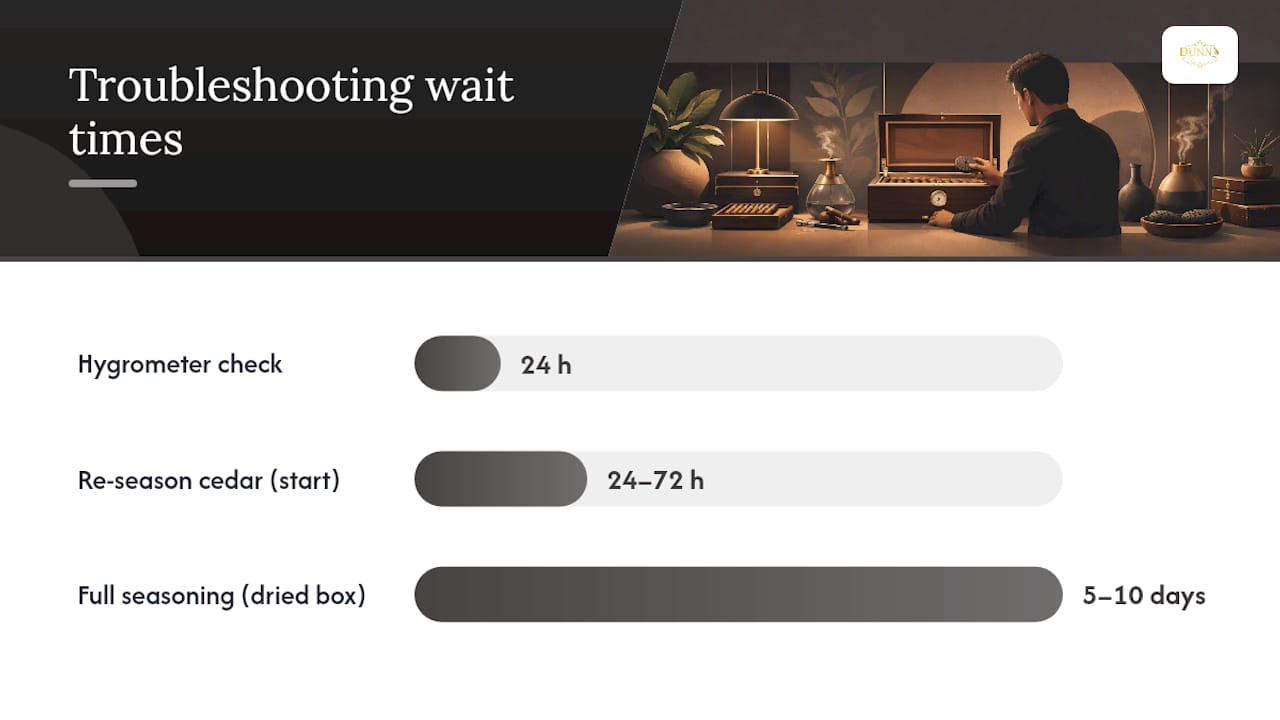
- Verify your hygrometer. Run the salt test (detailed below) or set your gauge next to a known accurate digital unit for 24 hours. Replace it if the reading is off by more than 2 to 3 percentage points.
- Re-season the wood. Wipe interior cedar with distilled water on a lint-free cloth, or set a small dish of distilled water inside for 24 to 72 hours. A full seasoning pack can take 5 to 10 days for a heavily dried-out box.
- Refill or upgrade your humidification source. Swap tired foam humidifiers for two-way humidity packs, which both add and pull moisture to hold a steady band rather than just dumping RH upward.
- Test the seal. Run the dollar-bill test on all four sides of the lid. Any spot where the bill slides out with no resistance needs attention.
- Contain the problem short-term. Drop your cigars into a sealed plastic tub (a “tupperdor”) with two extra Boveda packs while you sort out a permanent fix.
Pro Tip: Never mix humidification methods without a plan. Foam humidifiers plus two-way packs plus a wet sponge in the same box creates humidity spikes that swing wildly instead of holding steady. Pick one primary system and use a secondary only as backup.
Skip tap water entirely. Minerals and chlorine clog humidifier elements and can leave white deposits on cedar over time.
How to Season a Humidor and Size Your Humidifier
Seasoning swells the cedar’s wood cells and builds a moisture reserve the wood can draw on later, which is exactly why an unseasoned box drinks your cigars dry instead of protecting them. Skip it and every humidifier you install is fighting a losing battle against thirsty wood.
You have three practical paths. Wiping the interior with distilled water on a cloth works for light touch-ups and takes a few hours to overnight. Setting an open dish of distilled water inside for 24 to 72 hours handles a moderate dry-out. A full deep-season, using a dedicated high-RH seasoning pack left inside for 5 to 10 days, is the right call for a new humidor or one that’s been sitting empty and dry for months.
Sizing your humidification matches capacity to volume:
- Small desktop boxes (25 to 50 cigars) generally need one to two 65% RH humidity packs.
- Mid-size cabinets (100 to 250 cigars) typically need three to six packs, or a compact electronic unit.
- Large cabinet humidors and walk-ins do best with active electronic humidification rather than passive sponges, which simply can’t keep pace with that much air volume.
Re-season anytime you’ve had a deep dry-out, completed a seal repair, or left the box empty for an extended stretch. Case Elegance notes that re-seasoning after repairs measurably improves long-term stability, not just a one-time fix at purchase.
Is Your Hygrometer Lying to You?
Run the salt test before you trust any humidity reading. Fill a bottle cap with table salt, add a few drops of water to dampen it (not soak it), and place your hygrometer’s sensor next to the cap in a sealed plastic bag for 8 to 12 hours. A properly calibrated hygrometer should read close to 75% RH, since damp salt holds a stable, known humidity level.
- If your reading is off by more than 2 to 3 points, calibrate the unit if it allows adjustment, or replace it.
- Digital hygrometers with a calibration screw or app-based reset tend to hold accuracy longer than basic analog dials.
- Cheap analog units, the round dial gauges bundled with budget humidors, are notorious for drifting after just a few months of temperature swings.
- Place the hygrometer away from the humidifier itself. Reading the air a few inches from a Boveda pack gives you an artificially high number that doesn’t reflect the whole cabinet.
Analog dial hygrometers commonly drift 5 to 10 percentage points off true RH within their first year of use, which is precisely why serious collectors move to digital units with calibration options.
A single low reading after you open the lid to grab a cigar is normal and self-corrects within an hour. A reliable digital hygrometer paired with a week of logged readings quickly separates a transient dip from a genuine structural problem. If you want a gauge built for that kind of tracking, a digital hygrometer with logging capability removes the guesswork entirely.
Fixing a Seal That Won’t Hold
The dollar-bill test remains the fastest diagnostic you have. Close a dollar bill in the lid at each corner and along each side, then pull gently. Resistance means a tight seal; a bill that slides free means air, and moisture, is escaping right there. Follow it with a flashlight test in a dark room: shine a light inside with the lid shut and look for any glow escaping around the edges.
- Small gaps often respond to a thin bead of food-grade silicone along the problem section of the seam.
- A worn foam gasket, common on cabinet-style units, is a straightforward swap you can order from most humidor accessory suppliers.
- Sometimes seasoning alone re-seats a lid, since swelling cedar can close minor gaps that appear when wood dries and contracts.
- Warping severe enough that the lid no longer sits flush usually calls for a woodworker’s repair rather than a DIY fix.
Persistent leaks that reappear after repair, deep mold colonization in the wood grain, or warping bad enough that the lid won’t close flush are signs the case itself is beyond a reasonable repair.
How Packing Density and Cigar Condition Affect RH
Dry cigars act like sponges, quietly stealing humidity from everything around them, which is why a handful of parched sticks from a recent purchase can drag down an otherwise stable box within days.
- Pack cigars snugly enough to limit excess air volume but loose enough that air can circulate between rows.
- Spanish cedar trays and dividers add buffering surface area, giving the wood more capacity to absorb and release moisture evenly.
- Quarantine noticeably dry cigars (they’ll feel crackly or sound hollow when gently squeezed) in a separate tupperdor for gradual re-humidification rather than dropping them straight into your main collection.
Pro Tip: *Rehydrate dry cigars slowly.
Does Room Placement Really Matter That Much?
Temperature and relative humidity are locked together. Warm air holds more moisture, so a spike in room temperature can quietly push your RH down even though nothing inside the box changed. This is the logic behind the old 70/70 rule, though most experienced collectors now favor a tighter band closer to 65 to 69% to reduce beetle and mold risk while aging cigars.
- Keep your humidor away from HVAC vents, exterior walls, direct sunlight, and anywhere near a fireplace.
- Basements and closets on interior walls tend to hold the steadiest year-round temperature.
- If your home swings more than 10 degrees seasonally, a temperature-controlled electronic humidor removes that variable entirely.
- Log RH and temperature daily for one week using a hygrometer with data tracking to see whether your dip is a daily pattern or a one-off.
Repair, Upgrade, or Replace: A Decision Guide
Most fixes are cheap. A tube of food-grade silicone runs under $10, a replacement hygrometer $15 to $40, and a proper humidifier upgrade $20 to $60. None of that justifies buying new.
- Replace the humidor if you see recurring mold in the grain, warping bad enough the lid won’t seat, or leaks that return after repair.
- Upgrade rather than repair if you’re chasing the same problem repeatedly. A unit offering precision electronic control within ±1 to 2% RH, genuine Spanish cedar, and a robust seal ends the guesswork for good.
- Weigh the math honestly. If your collection is worth several thousand dollars, a $40 repair is obvious. If you’re patching the same $150 humidor for the third time, redirecting that money toward better equipment protects the investment instead.
Dunn’s Recommended Fixes for Persistent Humidity Problems
When seasoning, seal repairs, and hygrometer swaps still don’t hold a steady line, the equipment itself is the bottleneck. That’s the point where Dunnluxuryselections steps in with tools built to end the cycle rather than patch it again in three months.
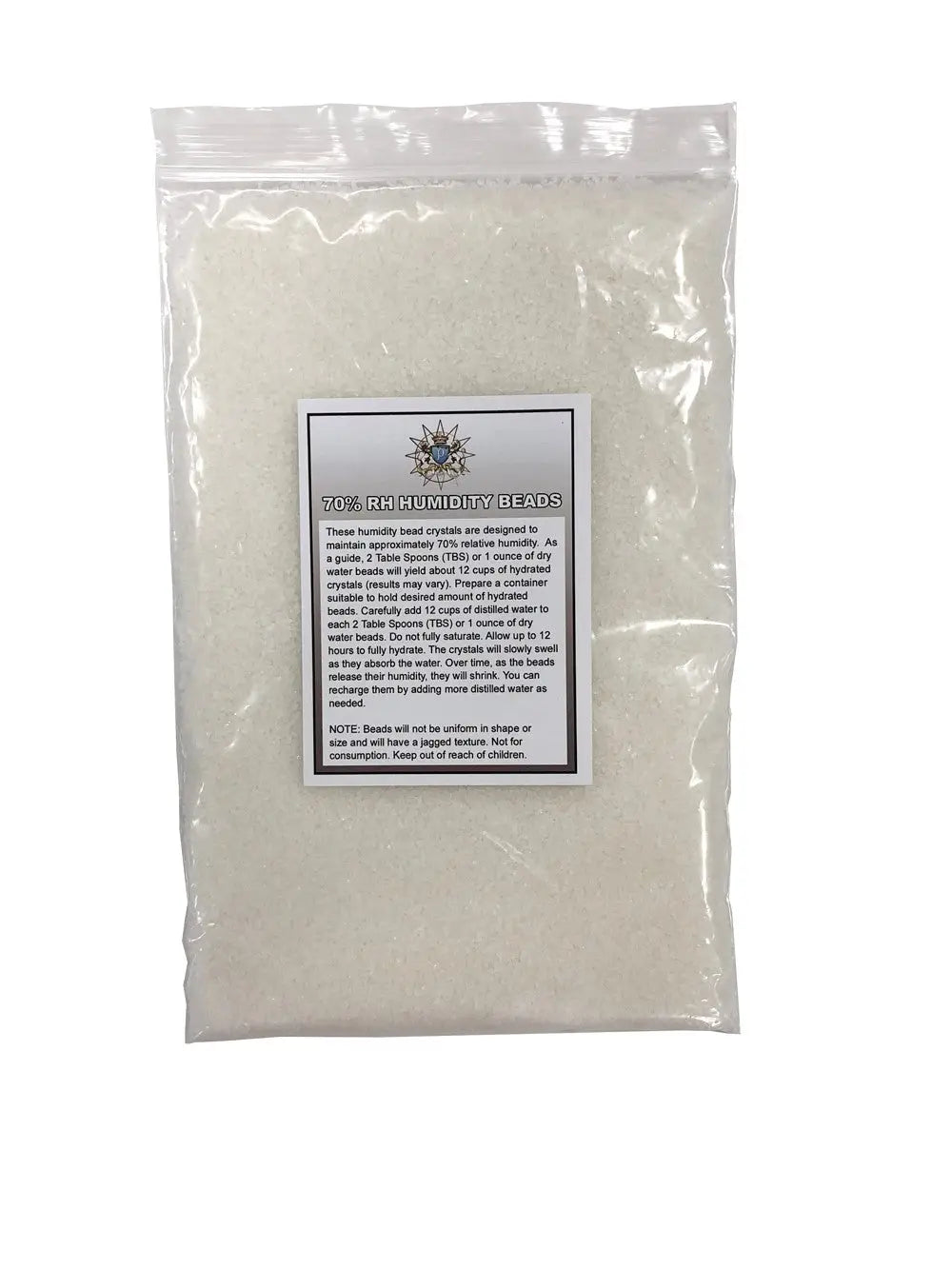
- Humidity Beads (1 lb) work well as passive buffering for desktop boxes or as a supplement alongside an electronic system in larger cabinets.
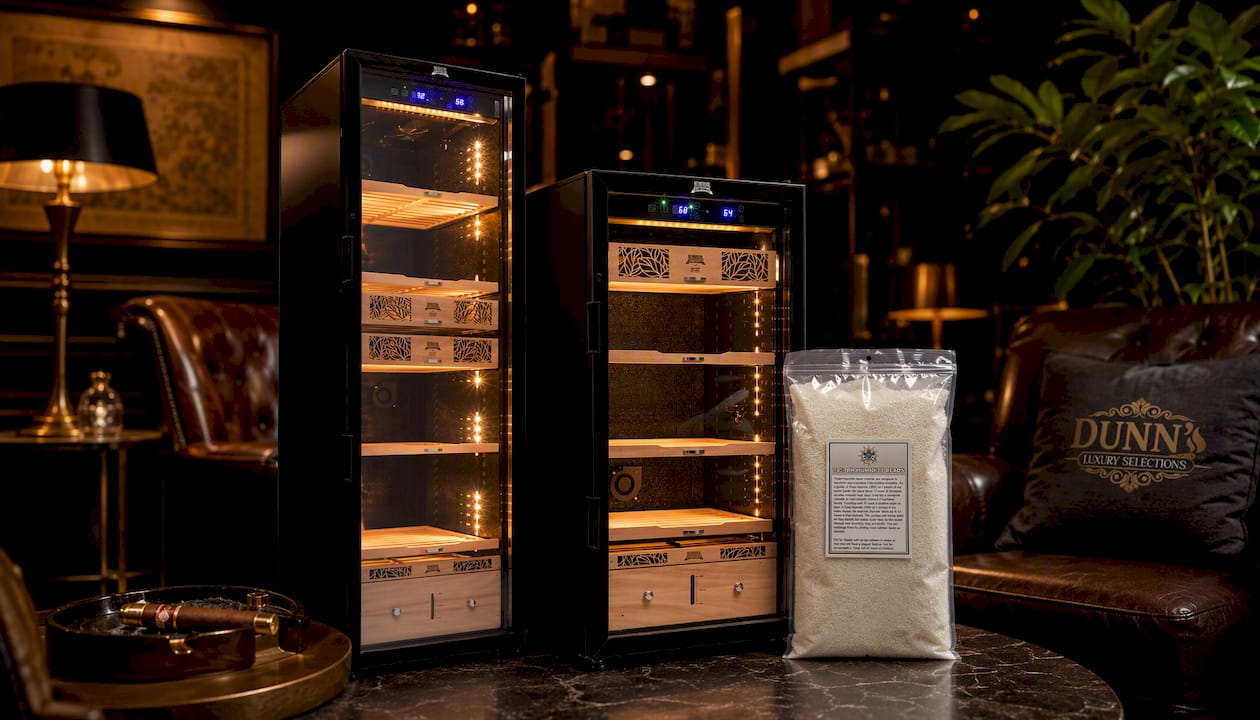
- Humidor Supreme® Electronic Humidor, 9000 Series Black delivers active humidity and temperature control for collectors tired of manually refilling packs every few weeks.
- Humidor Supreme® Electronic Humidor, 9100 Black offers an alternate footprint and reservoir capacity for larger collections that outgrew a desktop unit.
For seal or installation issues that go beyond a tube of silicone, Dunnluxuryselections’ white-glove consultation identifies the structural culprit and installs a lasting fix rather than a stopgap. If your humidor has failed you more than once, start with a diagnostic call before you buy anything else.
A Collector’s Maintenance Rhythm That Actually Prevents Problems
Check your hygrometer and humidifier weekly, a thirty-second glance while you grab a cigar. Review your logged readings once a month to catch slow drift before it becomes a crisis. Plan a full re-season annually, or sooner if you’ve had a deep dry-out.
A quality hygrometer and the habit of logging readings solve most humidity complaints before they start. Nearly every issue collectors bring to us traces back to one of the causes covered here, and nearly all of them are fixable in an afternoon.
— Belle Dunn
The Fastest Path to a Humidor That Actually Holds
Dunnluxuryselections is the resource collectors turn to once patching a temperamental humidor stops being worth the hassle. Rather than another round of silicone and hope, you get precision electronic control, genuine Spanish cedar construction, and a consultation that diagnoses the actual failure point instead of guessing at it.
If your box has cycled through three humidifier types and two hygrometers this year, that’s your signal to stop troubleshooting and start upgrading. Browse the electronic humidor collection built for collectors who’ve outgrown patch jobs, or reach out for a diagnostic consultation on your current setup. For those managing large cabinet volumes, our cabinet insulation guidance pairs well with an electronic unit to lock in stable RH year-round. Either way, your next step is simple: pick the fix that matches your problem and order it today.
Sources
For deeper reading on RH targets, seasoning, and troubleshooting, Boveda’s humidity guidance, Holt’s troubleshooting checklist, Case Elegance’s diagnostic guide, and Luxury Wine Appliances’ humidity range breakdown cover the ranges, beetle thresholds, and seasoning methods referenced throughout this guide.
- What’s the RH for cigars? — Boveda
- Troubleshooting Humidor Issues: Why Isn’t My Humidor Holding Humidity? — Case Elegance
- Why is My Humidor Losing Humidity? | Holt’s Clubhouse
- Best humidity range for aging cigars long-term — Luxury Wine Appliances
FAQ
Is 60% humidity too low for a humidor?
Yes, for most cigars. Sixty percent RH runs below the 65 to 72% range Boveda recommends, and cigars stored that dry will burn hot and lose flavor complexity over time.
Why can’t I get my humidor to 70% humidity?
The most common culprits are unseasoned wood pulling moisture away, an undersized humidification source, or a seal leak, check all three before assuming your humidifier is defective.
How do I fix a dry humidor?
Verify your hygrometer with a salt test, re-season the interior cedar with distilled water, then refill or upgrade your humidification packs. Test the seal last if the box still won’t hold.
Is 70% humidity too high for cigars?
It’s on the upper edge but not dangerous for short-term storage. Many experts now favor a tighter 65 to 69% band for long-term aging, since RH above roughly 72% raises beetle hatch and mold risk.
How often should I replace my humidor’s humidifier?
Foam and gel humidifiers typically need replacing periodically, while two-way humidity packs last for several months depending on box leakiness and how often the lid opens.
Does opening my humidor frequently cause humidity problems?
Brief dips after opening are normal and recover within an hour if your seasoning and humidification are adequate; frequent, prolonged opening in a poorly sealed box compounds into a real chronic drop.
Recommended
You May Also Enjoy
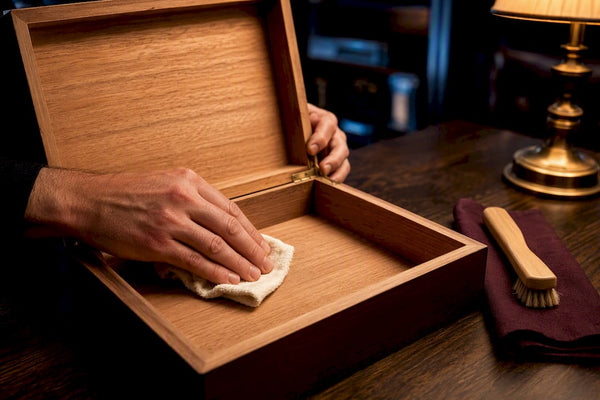
Save Flavor in 14 Days: Cleaning a Humidor for Collectors
For collectors: clean mold or plume without tainting cedar. Keep or toss decision rules, 14 days reseasoning, hygrometer...
Read Article
6 to 26 Weeks: Custom Humidor Timeline for Collectors & Gift Buyers
Plan a bespoke humidor with a realistic production calendar. See stage-by-stage timings, what typically adds weeks, and how...
Read Article
50/50 Propylene Glycol Ratio + 90/10 Flush for Collectors & Installers
Use a 50/50 propylene glycol ratio to hold passive humidors near 70% RH. Installer tested: occasional 90/10 water...
Read Article