

Explore the benefits of display humidors for presentation versus dedicated storage for aging. Learn the best practices for your collection.
If you’re weighing display humidor vs storage for your collection, here’s the direct answer: use a display humidor for short-term presentation and daily rotation, and use dedicated storage, whether that’s a cabinet, an electronic unit, or a sealed bulk container, for long-term aging and preservation. The two solve different problems, and trying to make one do both jobs is where most collections run into trouble.
A few facts shape that recommendation:
- Capacity gap: display units typically hold 25 to 200 cigars, while cabinet storage scales from several hundred to thousands of cigars.
- Maintenance behavior differs: passive two-way packs like Boveda and active electronic systems change how often you need to check in, and by how much.
- Best practice: pair a showpiece display humidor with a separate bulk storage strategy. That combination gives you both the guest-ready presentation and the quiet, stable environment your best cigars need to mature properly.
Key Takeaways
A display humidor handles short-term presentation and rotation, while a dedicated storage solution, cabinet, electronic, or bulk container, handles the long-term aging serious collections require.
| Point | Details |
|---|---|
| Match tool to purpose | Use display units for guest-facing rotation and storage units for long-term aging and archiving. |
| Mind the capacity gap | Display humidors run 25 to 200 cigars; cabinets scale from several hundred to thousands. |
| Season correctly | With two-way packs, do not open the humidor for a two-week period after sealing it. |
| Watch light and heat | Keep glass-front units away from windows to avoid greenhouse heating and beetle risk. |
| Consider Dunn’s for both needs | Dunnluxuryselections offers display humidors, electronic cabinets, and bespoke walk-ins for collectors who need presentation and preservation covered. |
Table of Contents
- What Do “Display Humidor” and “Storage Humidor” Actually Mean?
- How Do Design and Materials Affect Preservation?
- Should You Use Passive Packs or Active Humidifiers?
- How Do You Monitor and Season a Humidor Correctly?
- Which Setup Fits Your Collection and Goals?
- What’s the Setup Checklist for Each Option?
- What Do You Do When Something Goes Wrong?
- How Secure Is Your Collection in Each Setup?
- Does Portability Matter When Choosing Between Display and Storage?
- How Does UV Light Exposure Affect Display Humidors?
- Where Dunn’s Luxury Selections Fits Into Your Setup
- Sources
- FAQ
What Do “Display Humidor” and “Storage Humidor” Actually Mean?
The terms get used loosely, so let’s define them the way collectors actually experience them. A display humidor is a glass-front or acrylic unit built for visibility and access. Think LED-lit cabinets you’d find behind a lounge bar or on a study shelf. It’s optimized to be seen and reached into often, and capacity tends to run smaller as a result.
A storage humidor covers solid Spanish cedar cabinets, electronic cabinets, tupperdors, and custom walk-ins. These prioritize airtight seals, light exclusion, and climate stability over visual appeal, and they’re built for cigars that will sit undisturbed for months or years.
The smartest setups aren’t either/or. A hybrid approach puts your active rotation, the cigars you’ll smoke this month, in a display humidor for accessibility, and routes everything else into a climate-controlled cabinet or sealed bulk container built for aging.
- Display: visibility, accessibility, smaller footprint
- Storage: airtight seals, darkness, scale
- Hybrid: display for rotation, cabinet or bulk container for the archive
How Do Design and Materials Affect Preservation?
Spanish cedar isn’t decorative. It regulates moisture exchange between the wood and the air inside the box, and it imparts a subtle aroma that many collectors consider part of the aging process itself. Thicker cedar panels and heavier cabinet walls also add thermal mass, meaning the interior climate resists swings from a warm room or an open door far better than a thin-walled box does.
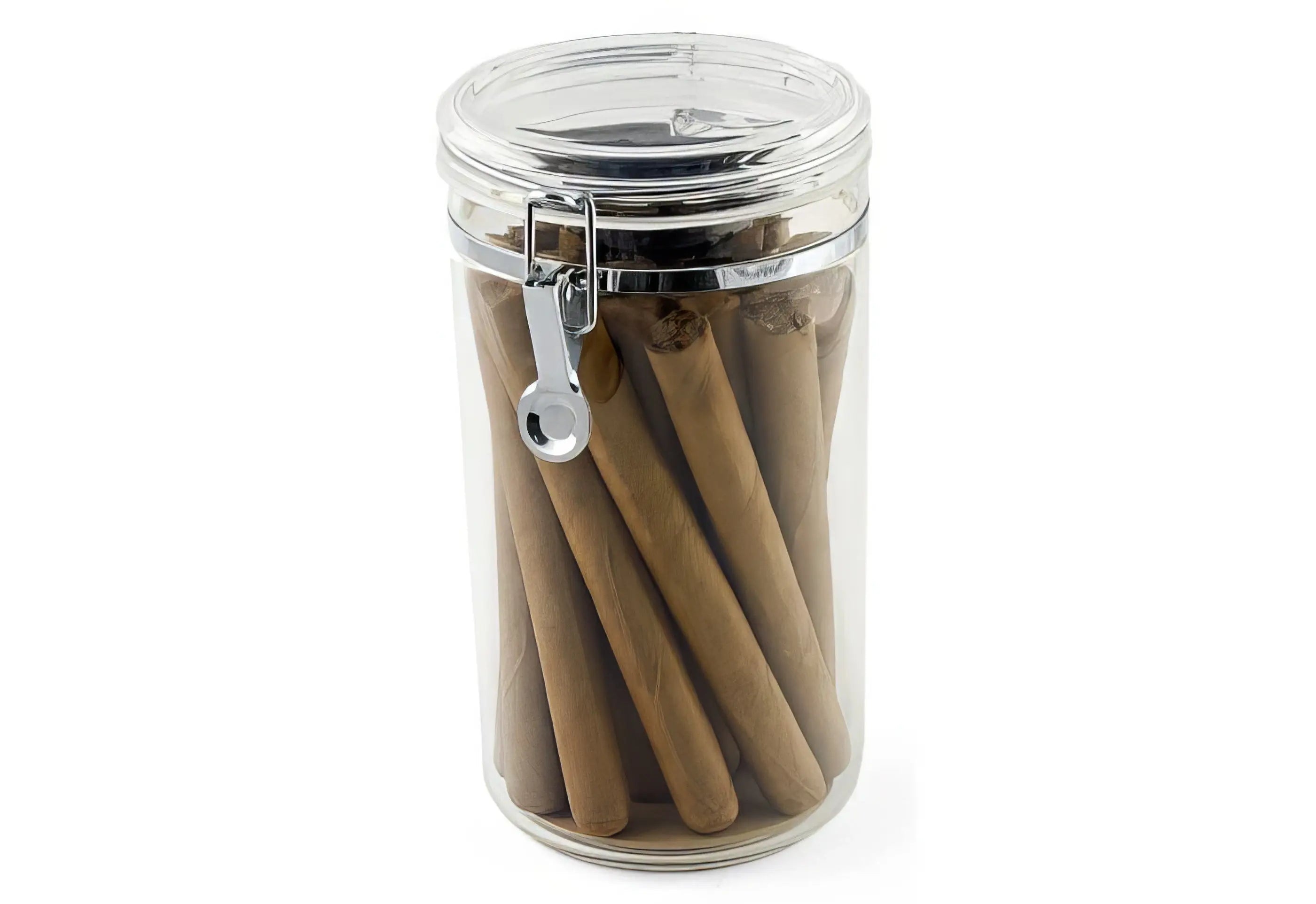
Glass, acrylic, and LED lighting sell display units, but they come with tradeoffs. Direct light on a sealed glass front can create a mild greenhouse effect, raising internal temperature even when the room feels comfortable. That’s a real risk for anything sitting near a window. Solid wood doors and quality gaskets seal tighter than glass panels typically do, which is part of why glass-top humidors demand more frequent monitoring than their solid-wood counterparts.
Scale matters too. A large cabinet’s thermal mass helps it hold steady RH, but it also needs a stronger humidification source to recover after you open the door. Small display boxes respond fast to adjustments, which sounds good until you realize they swing just as fast when conditions change.
- Cedar lining supports moisture exchange and aroma development
- Glass and acrylic favor looks over airtightness
- Bigger cabinets stabilize better but need more humidification power
Pro Tip: Never place a glass-front display humidor where afternoon sun hits it directly, even for an hour. That window of direct light can spike internal temperature enough to stress cigars and invite tobacco beetle activity.
Should You Use Passive Packs or Active Humidifiers?
The choice between passive and active humidification comes down to collection size and how stable your room already is.
Two-way polymer packs, Boveda being the standard example, are the low-maintenance option. Drop them in, and they hold a set RH point (65%, 69%, 72%) with minimal intervention. They work well in desktop units and tupperdors where the sealed environment doesn’t need much help staying consistent.
Active electronic humidifiers, along with thermoelectric cabinet systems, proactively maintain a stable microclimate rather than waiting for you to react to a drifting hygrometer reading. Larger cabinets and rooms with seasonal temperature swings generally need this level of control, especially if you’re aging cigars for years rather than weeks.
The tradeoffs are real on both sides. Passive systems ask little of you but can’t correct for a poorly sealed cabinet. Active systems handle more of the work but depend on power, and gel-based humidifiers can develop mineral deposits over time that require cleaning. Choosing active humidification shifts your role from reactive manager to someone closer to a curator checking on a system that’s already doing its job.
- Boveda-style packs: minimal upkeep, ideal for smaller sealed setups
- Electronic and thermoelectric systems: better for scale and unstable rooms
- Active systems reduce daily effort but add power dependency and occasional cleaning
How Do You Monitor and Season a Humidor Correctly?
Getting maintenance right is what separates a preserved collection from a ruined one, and it starts with your hygrometer.
- Calibrate before you trust it. Run a salt test on any new hygrometer, and never mount it directly above a humidifier, which creates a falsely high reading known as wet bias.
- Season new wooden humidors properly. Wipe the interior with distilled water, or use the two-way pack method. If you season with Boveda packs, the manufacturer protocol is explicit: do not open the humidor for 14 days.
- Check on a cadence that matches your setup. Display humidors, being more exposed, deserve daily or weekly glances. Cabinets with active systems can stretch to weekly or monthly checks.
A few standing rules keep this simple:
- Replace or refresh two-way packs once they feel fully crystallized or hardened
- Refill distilled water reservoirs on electronic units before they run dry
- Never open a freshly seasoned humidor early, even to check on it
Which Setup Fits Your Collection and Goals?
Your ideal setup depends on how much you smoke, how much you’re archiving, and how much monitoring you’re willing to do.
- Daily smoker, 25 to 100 sticks: a desktop or display humidor paired with low-maintenance two-way packs covers your needs comfortably.
- Serious collector, 300 or more cigars: a cabinet or electronic cabinet becomes practical for larger collections, providing capacity and improved humidity control.
- Long-term investor or aging strategy: a climate-controlled cabinet, or well-sealed bulk storage in a stable environment, suits multi-year aging horizons.
On raw numbers, desktop humidors run 25 to 200 cigars, cabinets scale from several hundred into the thousands, and custom walk-ins go as large as your space allows. Tupperdors deserve more respect than they get here. An airtight container plus Boveda packs can outperform a cheap wooden box on seal quality, and it does it at a fraction of the cost.
Watch for the moments that signal it’s time to upgrade. If your collection regularly exceeds about one hundred sticks, if you’ve had a past mold or beetle scare, or if the value of what you’re storing now exceeds what a proper cabinet costs, that’s your trigger. At that point, electric cabinets deliver ±1 to 2% RH precision against the ±5 to 10% swings typical of passive desktop units, a meaningful difference once you’re aging cigars for years rather than weeks.
- Small, active rotation → desktop or display unit
- Growing serious collection → cabinet or electronic cabinet
- Long-horizon aging → climate-controlled cabinet or bulk tupperdor
What’s the Setup Checklist for Each Option?
For a display humidor:
- Place it away from direct sunlight and HVAC vents.
- Check the door seal and gasket before loading cigars.
- Season with the wipe method or two-way packs, then set your hygrometer away from direct humidifier influence.
- If guests will handle the cigars, keep a “look but ask before touching” habit; every open and close cycle costs you humidity.
For storage or bulk setups:
- Choose an interior wall location, never an exterior wall or a spot near a window.
- Add active humidity control if the room itself fluctuates seasonally.
- Decide whether to unbox cigars or leave them in original cedar boxes; either works, but shelving needs airflow gaps either way.
Target numbers worth memorizing: 70% RH and 70°F for short-term display and rotation, and 65 to 69% RH at 65 to 70°F for genuine long-term aging. Some collectors trim RH slightly lower, toward the bottom of that range, for cigars they intend to hold for several years or more.
What Do You Do When Something Goes Wrong?
Fast, correct action beats panic every time.
- Dry cigars: move them into a sealed bag with a Boveda pack set to 69% until they rehydrate gradually.
- High RH or visible mold: isolate the affected sticks immediately, lower your target RH, and improve air circulation inside the unit.
- Heat spike or beetle concern: relocate the collection somewhere cooler right away and inspect closely for active infestation signs, tiny holes in the wrapper are the giveaway.
For anything urgent, sealed containers with fresh two-way packs are your emergency holding pattern while you diagnose the real issue. If you’re running an electronic unit, check the power connection and fan function first; keep backup packs on hand in case the unit itself has failed.
If problems recur, or if you’re consistently fighting RH swings despite doing everything right, that’s a signal to stop patching and move to a properly climate-controlled storage solution instead. Persistent instability usually means the enclosure itself, not your technique, is the problem.
How Secure Is Your Collection in Each Setup?
Display humidors, by design, prioritize visibility over security. Glass panels that show off your collection to guests are the same panels that show it to anyone else walking through the room. Most display units rely on a simple cabinet lock at best, adequate for keeping curious hands out but not built to deter a determined theft.
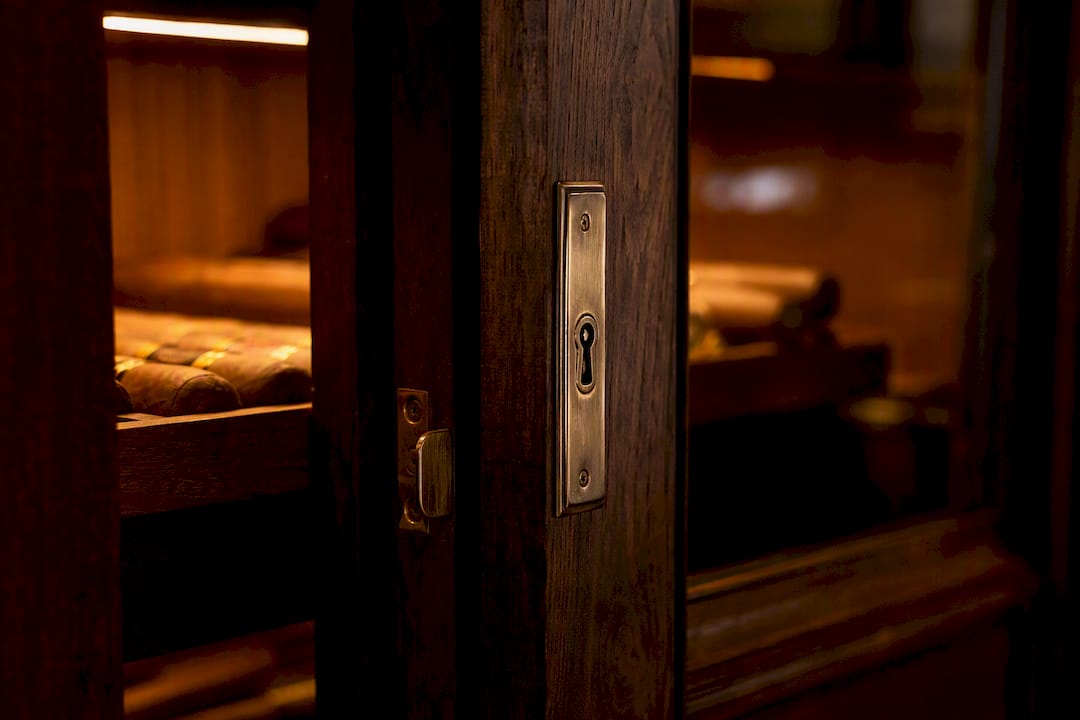
Storage-focused units take a different posture. Cabinet humidors and locker-style systems often include commercial-grade locking mechanisms, and multi-user locker setups let clubs or lounges assign individual keyed or combination access per member. That matters if you’re storing cigars for a group rather than just yourself.
For collectors with genuinely high-value holdings, rare vintages, limited releases, cigars purchased as long-term investments, the calculus shifts. A locked, opaque storage cabinet or a dedicated locker system protects both the cigars and your privacy about what you own. Display units simply weren’t built with that threat model in mind; they were built to be looked at.
The practical takeaway: keep your visible rotation stock in the display humidor, since a modest loss there is annoying but not devastating. Keep anything irreplaceable in a securable storage unit, ideally one that doesn’t advertise its contents to every visitor. Insurance policies for cigar collections often reflect this distinction too, with better terms available when high-value stock sits in a locked, non-display environment rather than behind glass.
Does Portability Matter When Choosing Between Display and Storage?
Portability rarely gets discussed alongside preservation, but it shapes which option actually fits your life. Display humidors are largely stationary by design. Once a glass cabinet is seasoned, filled, and dialed in, moving it introduces seal stress and RH disruption you’d rather avoid.
Storage solutions split into two very different portability profiles. Cabinets and walk-ins are fixed installations, arguably more so than display units, since they’re often built into a room. Tupperdors and travel humidors sit at the opposite end. A well-sealed travel humidor lets you carry a small, curated selection without touching your main collection at all, useful for anyone who travels for work or takes cigars to a friend’s house regularly.
Accessibility is the other half of this equation. A display humidor sitting on a bar or shelf invites casual access, which is exactly the point when you’re entertaining. Storage cabinets tucked into a closet or spare room trade that convenience for stability, since fewer open and close cycles mean fewer chances for humidity to escape.
If your lifestyle involves frequent travel or sharing cigars outside the home, build a small travel-ready kit separate from both your display and storage systems. That keeps your main collection’s seals intact while still giving you something to grab on the way out the door. The collectors who struggle most are usually the ones trying to make a single unit handle display, bulk storage, and travel all at once. Each job wants its own dedicated container.
How Does UV Light Exposure Affect Display Humidors?
Light exposure is the most underestimated risk in any display setup. Cigar wrappers can fade and dry unevenly under sustained light, and the greenhouse effect from a glass-facing door can raise internal temperature enough to meaningfully increase tobacco beetle risk, since beetle eggs are more likely to hatch in warmer conditions.
The fix isn’t complicated, but it does require discipline. Position display units away from windows entirely, even ones that only get indirect light for part of the day. If the unit uses LED lighting for presentation, favor low-heat LED fixtures and avoid running them continuously; illuminate the display when you’re actually using or showing the room, not around the clock.
Interior placement, away from exterior walls and any direct light path, does more for long-term stability than almost any other single decision you’ll make about a display unit. Combine that with a slightly tighter RH target if the unit’s location can’t be fully controlled, and you offset much of the added risk that comes with a glass-front design.
Author’s perspective: balancing beauty and preservation
I tell every serious collector the same thing: separate your showpiece from your archive. Keep active rotation in a humidor built to be seen, and let your aging stock rest, undisturbed, in a climate-stable cabinet or sealed bulk container. As a curator, Dunn’s Luxury Selections helps collectors match display aesthetics to real preservation needs, not one at the expense of the other.
Where Dunn’s Luxury Selections Fits Into Your Setup
Dunnluxuryselections built its reputation on solving exactly the tension this article walks through: the pull between a humidor that looks extraordinary and one that ages cigars correctly for years. You don’t have to pick one lane. Dunnluxuryselections offers both, from acrylic and glass-front display humidors built for presentation to electronic cabinets and bespoke walk-in humidors engineered for long-term stability.

What sets the experience apart is white-glove delivery and real consultation, not a generic product listing. If you’re outgrowing a desktop unit, the Humidor Supreme Commercial Cigar Locker offers the secure, high-capacity storage a growing collection demands, while the Barbatus Cabinet line balances refined finishes with the airtight performance serious aging requires. Whether you need a showpiece for the lounge or a climate-controlled archive for your best sticks, browse Dunnluxuryselections’s full collection and get a personalized recommendation before you buy.
Sources
FAQ
Is a display humidor bad for long-term cigar aging?
Not inherently, but it’s riskier. Glass and light exposure make display units more vulnerable to swings, so most collectors reserve them for active rotation rather than multi-year aging.
What RH should I target for short-term versus long-term storage?
Aim for 70% RH and 70°F for short-term display and rotation, and 65 to 69% RH at 65 to 70°F for long-term aging.
Can a tupperdor really replace a cabinet humidor?
For bulk storage on a budget, yes. A sealed airtight container with Boveda packs often seals tighter than a cheap wooden box, though it lacks a cabinet’s capacity and presentation value.
How often should I check a display humidor versus a cabinet?
Check display units daily or weekly since they’re more exposed to environmental swings; cabinets with active humidification can typically go weekly to monthly.
Does Dunn’s Luxury Selections offer both display and storage humidors?
Yes. Dunnluxuryselections carries display humidors for presentation alongside electronic cabinets and custom walk-ins for long-term storage, with consultation to match the two to your collection.
What triggers an upgrade from desktop to cabinet storage?
Common triggers include a collection regularly exceeding around 100 cigars, a past mold or beetle incident, or cigar value that now exceeds the cost of proper cabinet storage.
Recommended
You May Also Enjoy
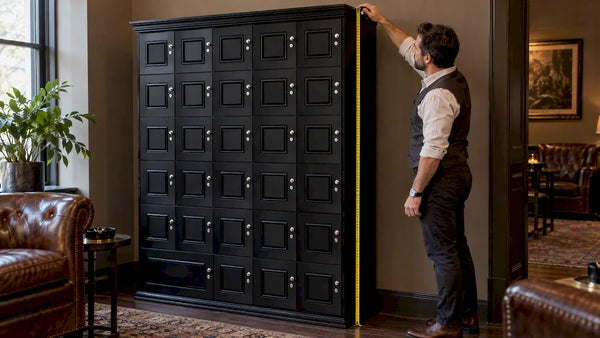
Cigar Locker Dimensions: Sizing Guide for Collectors and Lounges
Cigar locker dimensions explained: compartment sizes, cabinet footprints, capacity math and clearances, so you size a locker bank...
Read Article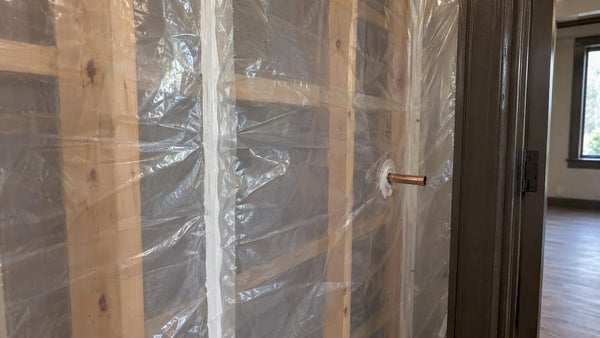
Sealing a Walk-In Humidor: Envelope, Door and Penetrations
How to seal a walk-in humidor properly: vapor barrier placement, door gasket, penetrations and the controlled airflow a...
Read Article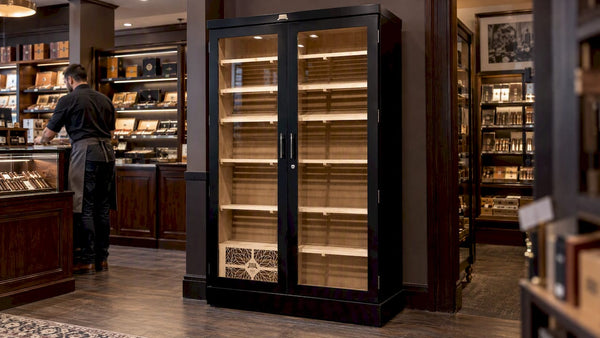
Retail Humidor ROI: How to Measure What a Display Earns
What does a retail or lounge humidor really return? A practical framework for cigar shops, lounges and clubs:...
Read Article