

Quick, safe fixes to lower humidor humidity and save cigars. Follow a five step recovery to reach 65–70% RH and stabilize in 24–48 hours.
Remove or reduce your humidification source immediately, isolate any spongy-feeling cigars in a dry box, and target 65 to 70% relative humidity. Most humidors show real improvement within 24 to 48 hours, with full stabilization taking up to two weeks. Get the moisture source under control first. Everything else, from hygrometer calibration to seasonal upkeep, comes after that.
TL;DR:
- Maintaining humidity between 65 and 70% is crucial, and full stabilization typically takes one to two weeks after correcting the moisture source.
- Moving damp cigars into a dry box for 24 to 48 hours helps prevent shock and accelerates moisture reduction during over-humidity recovery.
- Calibrating hygrometers with the salt test and monitoring their accuracy regularly prevents measurement errors that can lead to unnecessary adjustments.
- Ambient temperature significantly influences humidity safety levels, as higher temperatures hold more moisture, increasing the risk of mold and beetle activity.
- For persistent humidity issues, systems like the Cigar Oasis Plus offer active regulation, especially in larger storage environments where passive methods fail.
Table of Contents
- How Do You Know If Your Humidor Is Too Humid?
- Step-by-Step Recovery Plan for an Over-Humidified Humidor
- Are Your Hygrometer Readings Actually Accurate?
- Preventing High Humidity Before It Starts
- When Should You Call in a Professional?
- What Actually Matters More Than Hitting 70% Exactly
- Fixing Persistent Humidity Problems With the Right Equipment
- Sources
- FAQ
How Do You Know If Your Humidor Is Too Humid?
Relative humidity between 65 and 70% is the safe zone for everyday smoking, with many collectors preferring 62 to 65% for long-term aging to keep mold risk low. Between 70 and 72%, you’re in watch territory. Above 72 and up to 75%, you’re in danger, especially if the exposure lasts more than a few days.
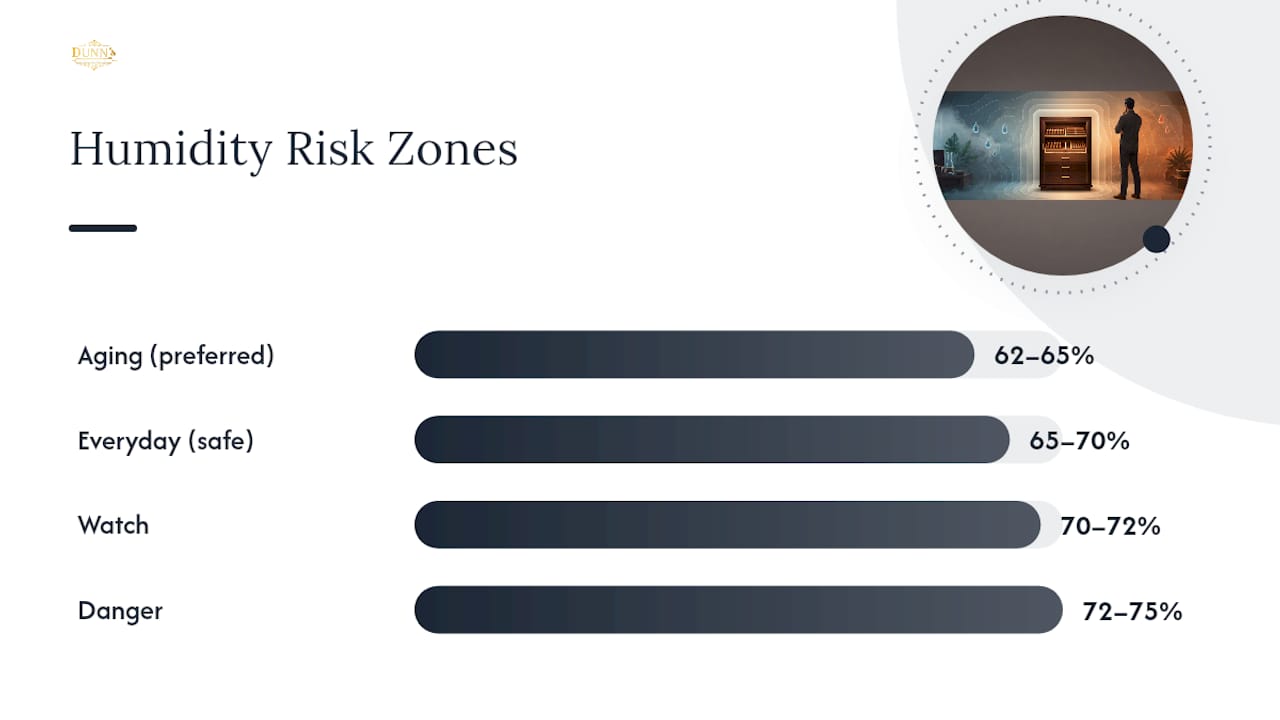
Duration matters as much as the number itself. One that sits there for two weeks is a different story entirely.
Your senses will tell you before your hygrometer does, sometimes. Watch for:
- A spongy or squishy feel when you gently press the cigar
- Canoeing or an uneven, tunneling burn
- A musty, damp smell instead of the usual sweet tobacco aroma
- Visible white or blue-green mold spots on the wrapper or box interior
- Swollen cellophane, warped bands, or boxes that won’t close properly
Pro Tip: Mold and bloom look almost identical to the untrained eye. Mold smells musty and stays put when you brush it. Bloom (plume) is a fine, powdery crystal that wipes away easily and carries no odor.
Temperature changes the math entirely. Higher temperatures hold more absolute moisture at the same RH reading, which is why a humidor sitting at 72% RH in a 65 degree room is far safer than the same humidor at 72% RH in a 78 degree room. Tobacco beetle eggs, dormant in most cigars, tend to hatch once temperature and humidity climb together past certain thresholds. That combination, not humidity alone, is what turns a minor storage error into a ruined box.
Step-by-Step Recovery Plan for an Over-Humidified Humidor
Fixing high humidity in a humidor isn’t complicated, but the order of operations matters. Skip a step and you risk shocking cigars that are already stressed.
- Pull the humidifier. Remove your humidification device entirely, whether it’s a foam puck, gel jar, or electronic unit. Check where your hygrometer sits at the same time; units placed near the humidifier itself or against a cedar wall often read high because of localized moisture pooling rather than true cabinet-wide RH.
- Dry-box the affected cigars. Move any spongy or visibly damp cigars into an untreated wooden box or another breathable, unhumidified container for 24 to 48 hours. This lets excess moisture escape gradually rather than all at once.
- Introduce a corrective element to the main humidor. Once the source is removed, add a lower-RH two-way pack, such as a Boveda 65, or a small food-safe desiccant packet, to pull ambient RH down over several days rather than overnight.
- Avoid aggressive drying. Never point a fan directly at cigars, leave them near a heat vent, or set them in direct sunlight to “speed things up.” Rapid moisture loss cracks wrappers and strips flavor permanently, even after the RH number looks fine again.
- Reintroduce cigars once RH holds steady. Wait until your humidor reads consistently within your target range for at least 48 hours before returning dry-boxed cigars. Check readings daily during the first week of recovery.
Pro Tip: If your hygrometer swings more than 3 to 4% within a single day with no lid openings, suspect a calibration problem before you chase the humidity itself.
Are Your Hygrometer Readings Actually Accurate?
A shocking number of “humidity too high” panics turn out to be measurement problems, not moisture problems. Uncalibrated hygrometers are one of the most common sources of bad readings, and analog dial units drift the worst over time.
Run two hygrometers side by side: your existing unit alongside a properly calibrated digital model, like the 300 Series digital hygrometer.
The salt test remains the gold standard for a quick check:
- Fill a bottle cap with table salt and add a few drops of water until it’s damp, not soupy.
- Seal the cap and hygrometer together in a small airtight bag for 8 to 12 hours.
- A correctly calibrated hygrometer will read 75% RH, since salt saturation holds that level naturally.
Place hygrometers away from the direct airflow of humidifier elements and away from the lid seam, where outside air leaks in most. Check readings daily while recovering, weekly once stable, and log the numbers using something like a simple humidity tracking method to catch drift before it becomes a crisis.
Preventing High Humidity Before It Starts
Most humidity problems trace back to one of two causes: an oversized humidifier for the cabinet’s volume, or seasoning mistakes made when the humidor was first broken in.
Match your humidification method to your collection’s actual size. Small boxes and travel cases do well with humidity beads or two-way packs.
- Season new cedar slowly with distilled water on a cloth, never by soaking wood directly
- If your first seasoning attempt leaves the cabinet reading above 75% for days, you’ve over-seasoned
- Leave breathing room between cigars; overpacked boxes trap moisture unevenly
- Check hinges and corners regularly for condensation, a sign of trapped, stagnant air
- Recalibrate hygrometers every three to six months and adjust targets seasonally as ambient humidity shifts with the weather outside
When Should You Call in a Professional?
DIY fixes solve most humidor problems. They stop working when you’re managing a walk-in room, when condensation keeps returning to the same corner no matter what you try, or when mold reappears within weeks of a full cleaning. At that scale, the issue usually isn’t user error. It’s inadequate airflow design or an undersized system fighting a losing battle against room volume.
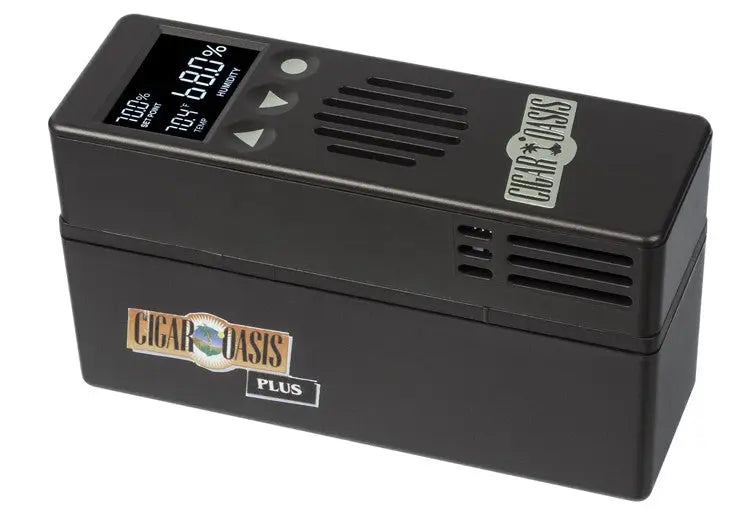
Custom walk-in humidors with white-glove installation and zoned electronic regulation can address this problem. For cabinets and larger builds, systems like the Cigar Oasis Plus manage humidity actively instead of passively, which matters once your collection outgrows what a bead pack can stabilize on its own.
What Actually Matters More Than Hitting 70% Exactly
Chasing one perfect number is where most collectors go wrong.
Two-way packs win on convenience and forgive small lapses in attention. Electronic climate control wins on precision, particularly for larger collections where microclimates form between shelves. Neither is universally right; the choice depends on your collection’s size and how much daily attention you’re willing to give it.
A short checklist worth keeping near your humidor: check RH daily during any recovery period, verify your hygrometer twice a year, dry-box anything that feels spongy before it molds, and never chase a number faster than the tobacco can safely follow.
— Belle Dunn
Fixing Persistent Humidity Problems With the Right Equipment
If you’ve corrected the humidification source and RH still won’t hold, the equipment itself is usually the problem, not your technique.
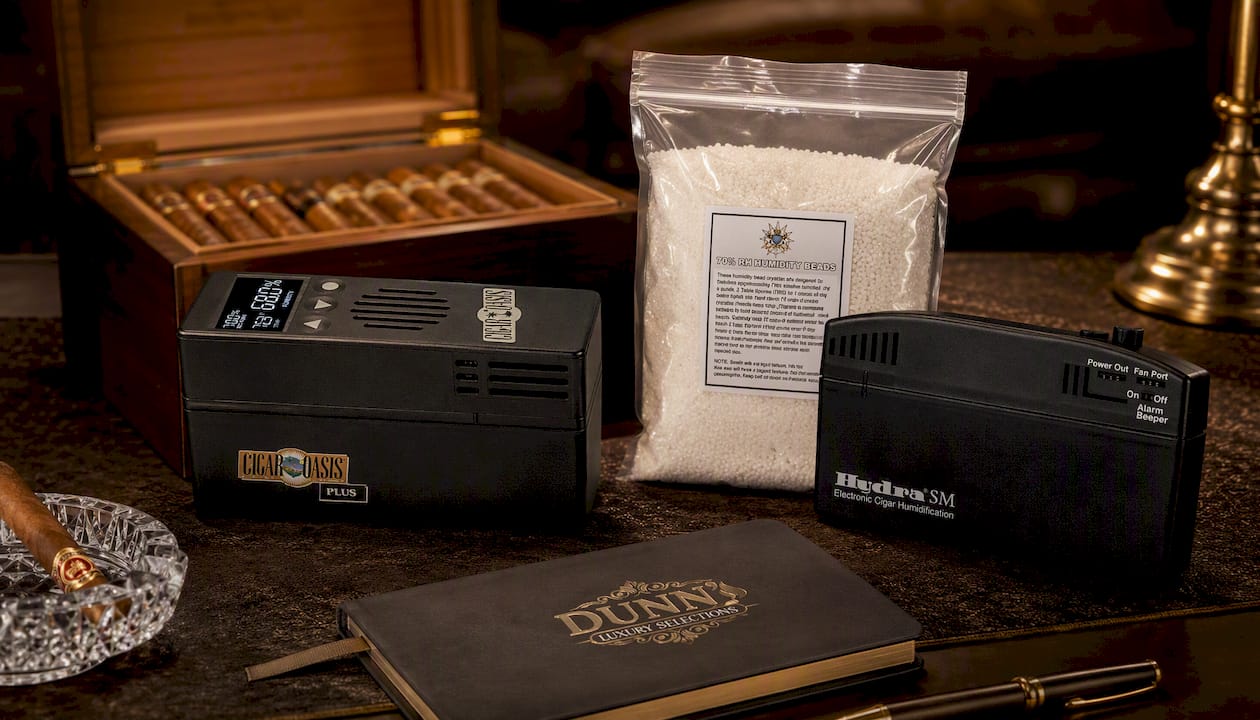
For cabinets and walk-in rooms, the Cigar Oasis Plus delivers active, sensor-driven humidification that adjusts output automatically instead of dumping moisture at a fixed rate the way passive foam or gel systems do. For medium-sized cabinets where you want precise electronic control without the footprint of a full cabinet system, the HYDRA SM electronic humidifier fills that gap well. If your collection lives in smaller boxes or you travel with cigars, humidity beads still outperform foam pucks for even, passive control.
When repeated fixes don’t hold and you’re managing a room-sized collection rather than a cabinet, that’s the point to stop patching and start planning a custom build. Walk-in humidors with zoned electronic regulation can be designed and installed to fit specific spaces, sometimes including white-glove delivery and consultation from the start. Get a consultation to talk through what a properly engineered system looks like for your collection.
Sources
- Renegade Cigars — Over-humidification
- Boveda — What’s the RH for cigars?
- Howard Environmental — Season, calibrate, mold-proof humidors
- Renegade Cigars — Dry boxing
FAQ
Is 75% Humidity Too High for a Humidor?
Yes. Above 72 to 75% RH, mold growth and beetle activity risk rise sharply, especially if temperatures climb alongside it.
Is a Boveda 72 Pack Too High for Cigars?
A Boveda 72 sits at the upper edge of the safe range and suits drafty or naturally dry cabinets, but it’s not the right choice for humidors that already run humid.
How Long Does It Take a Humidor to Recover From High Humidity?
Most humidors show noticeable improvement within 24 to 48 hours of removing the humidification source, with full stabilization taking up to two weeks depending on how severe the overage was.
Recommended
You May Also Enjoy
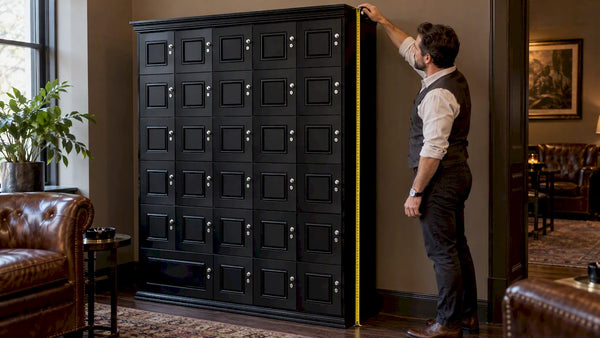
Cigar Locker Dimensions: Sizing Guide for Collectors and Lounges
Cigar locker dimensions explained: compartment sizes, cabinet footprints, capacity math and clearances, so you size a locker bank...
Read Article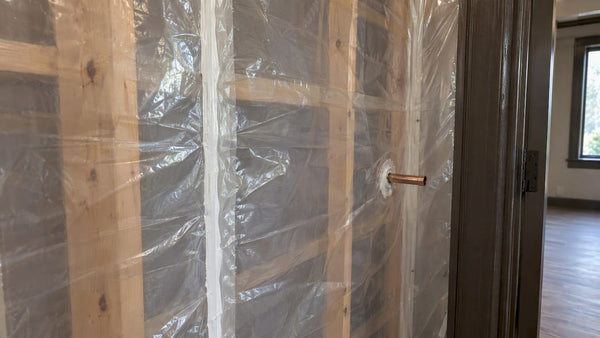
Sealing a Walk-In Humidor: Envelope, Door and Penetrations
How to seal a walk-in humidor properly: vapor barrier placement, door gasket, penetrations and the controlled airflow a...
Read Article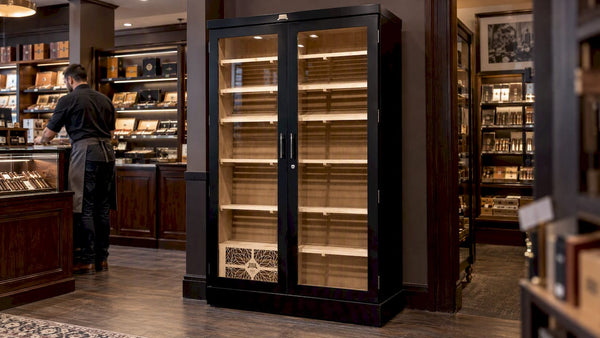
Retail Humidor ROI: How to Measure What a Display Earns
What does a retail or lounge humidor really return? A practical framework for cigar shops, lounges and clubs:...
Read Article