

Set and hold 65–68% RH and 65–70°F in locker or cabinet humidors using calibrated hygrometers, two way packs, and clear seasoning steps for stable club...
The correct lounge humidor setup holds 65–68% relative humidity and 65–70°F, achieved by calibrating a digital hygrometer, seasoning the cabinet’s Spanish cedar interior to that target, then maintaining it with two-way humidity control packs or an appropriately sized electronic humidifier. Season for several days to a couple of weeks before loading a single cigar and hold that reading steady for at least 48 to 72 hours before you trust it. Everything else is refinement.
TL;DR:
- Use a calibrated digital hygrometer and maintain a humidity level of 65–68% RH, with temperature kept between 65–70°F, for optimal cigar storage.
- Season the humidor interior thoroughly and monitor RH stability over several days before loading cigars, avoiding overstuffing and ensuring proper airflow.
- Adjust for climate variations by adding humidification in winter or ventilating in summer, and consider larger, climate-controlled systems for multi-locker or commercial setups.
- Maintain humidity packs and check seals regularly, replacing packs when they harden and inspecting door gaskets with the dollar-bill test to prevent uneven RH.
- Minimize light exposure, especially UV rays, and use LED and UV-filtered glass to protect cigars from damage during display or routine lighting.
Table of Contents
- What you need for a lounge humidor setup
- Step-by-step: seasoning a new lounge humidor
- What humidity and temperature should a lounge humidor hold?
- Where to put a lounge humidor and how climate changes the plan
- Maintaining a lounge humidor without the guesswork
- Choosing between two-way packs, traditional solutions, and electronic control
- Dunn’s Luxury Selections: solving lounge-scale stability
- Lighting considerations inside the humidor
- Integrating a lounge humidor into your room’s HVAC
- Collector perspective: stability beats perfection
- Dunn’s lounge and club humidor options
- Sources
- FAQ
What you need for a lounge humidor setup
Before you touch a single cigar, gather the right equipment. A lounge-scale cabinet or locker system fails less often from bad luck than from someone skipping a $30 tool.
- Digital hygrometer. Analog dial hygrometers drift by 5 to 10 percentage points and rarely get checked. A digital unit, calibrated against a salt test, is the only instrument worth trusting in a commercial-scale cabinet.
- Humidification source. Two-way packs (Boveda-style) hold a fixed RH by both releasing and absorbing moisture, which makes them the lowest-maintenance option for ideal cigar humidity in lockers this size. Gel or sponge humidifiers work but need manual refills and swing more. Electronic humidifiers give the tightest control for large cabinets but cost more upfront and need a water reservoir.
- Solution type. Distilled water only, never tap, which carries minerals that clog foam and invite bacteria. Propylene glycol solution suits foam or gel humidifiers designed for it, not two-way packs.
- Spanish cedar lining, tight seals, and slatted racks for airflow between rows. Beyond roughly 300 to 500 cigars, a wineador-style cabinet or dedicated locker system starts to outperform a converted furniture piece.
- Backup accessories: a spare thermometer, replacement packs, and a soft cloth for wiping down interior panels.
Step-by-step: seasoning a new lounge humidor
Seasoning is the one phase where shortcuts show up later as ruined cigars. Follow this sequence and you eliminate almost every rookie failure mode.
- Calibrate the hygrometer first. Seal it in a small bag with a bottlecap of table salt and a few drops of water for 8 to 12 hours. It should read 75% RH; note the offset and apply it to every future reading.
- Season the interior. Wipe every cedar surface with distilled water using a clean cloth or sponge, being generous but not soaking. Place open containers of distilled water or fully charged two-way packs inside, close the lid, and let the wood drink for 24 to 48 hours before checking.
- Watch the ramp to target. You want the reading to climb steadily toward 65–70% RH and hold there for two to three consecutive days before you consider the cabinet ready. If it stalls below 60%, add another humidification source; if it overshoots past 75%, crack the lid for a few hours.
- Stage the first fill. Leave cellophane on for the first two to three weeks. It’s breathable enough to let cigars equalize with the cabinet’s RH, and it protects wrappers while the environment is still settling. Don’t overstuff shelves; leave gaps for airflow and spread your humidity packs across every level, not just the top shelf.
- Monitor daily for the first two weeks, then drop to weekly checks once three consecutive readings land within a point of each other.
Pro Tip: Log every reading in a simple notebook or phone note during the first month. A cabinet that swings from 68% to 71% and back tells you far more about a bad seal than a single snapshot ever will.
What humidity and temperature should a lounge humidor hold?
Most experienced collectors settle on 65–68% RH rather than chasing a textbook 70%, favoring a firmer burn and meaningfully lower mold risk across a mixed inventory, a range backed by broader guidance on cigar humidity targets. Pair that with 65–70°F, and you’re in the zone most premium tobacco tolerates well over years of aging.
The classic “70/70” rule (70% RH, 70°F) still gets quoted everywhere, but it’s a starting point, not gospel. The more useful tool for a lounge with imperfect climate control is the “135 rule”: add your temperature in Fahrenheit to your RH percentage, and aim for a sum near 135. A room running warm at 72°F pairs well with 63% RH (72 + 63 = 135); a cooler 66°F room can support 69% RH.
- Above 72–75% RH: mold risk climbs sharply, and tobacco beetle eggs (dormant in most leaf) become far more likely to hatch.
- Below 62% RH: wrappers dry out, cigars burn hot and harsh, and aging essentially stalls.
- Older, box-pressed, or Cuban-style cigars often prefer the lower end of the range; younger, oilier sticks tolerate slightly higher RH.
Where to put a lounge humidor and how climate changes the plan
Site your cabinet in an interior room away from exterior walls, windows, and HVAC vents. Direct sunlight bakes wrappers and swings temperature fast; a vent blast dries out packs in days instead of months.
Climate dictates how hard your humidification has to work. Dry heating seasons in northern winters pull moisture out of a cabinet aggressively, often demanding more two-way packs per shelf or a step-up to an electronic humidifier. Humid summers near the coast can flip the problem entirely, pushing RH past 70% with no extra input at all.
- Winter: add packs, check weekly instead of biweekly, and consider a low-output electronic unit if your lounge runs a forced-air furnace.
- Summer or humid climates: watch for over-shoot, ventilate briefly if RH creeps past 72%, and don’t be afraid to pull a pack or two.
- Scaling up: once you’re managing multiple lockers or a room-sized collection, distributed humidifiers or a dedicated climate-controlled cabinet beat trying to stretch a handful of packs across too much cubic footage.
Maintaining a lounge humidor without the guesswork
Stability, not perfection, is what actually protects a collection over years.
- Check daily for the first month, then weekly once three straight readings agree within a point.
- Replace two-way packs when they harden, typically every two to six months depending on your climate and cabinet traffic.
- Learn to tell plume from mold. Plume is a dusty, crystalline bloom on the wrapper, harmless and actually a sign of aging oils surfacing. Mold is fuzzy, often blue-green or white, and spreads. If you see true mold, pull every cigar, air out and wipe down the cabinet fully, discard anything visibly infected, and re-stabilize humidity before returning stock.
- Fix over-humidification by cracking the lid for a few hours, pulling a pack, or adding a small packet of desiccant temporarily.
- Fix persistent dryness by checking the door seal with a dollar-bill test (close it on a bill; if it slides out easily, the gasket needs attention) before adding more humidification.
Pro Tip: When a locker system serving 15 or more members starts showing uneven RH shelf to shelf, that’s usually a seal or airflow problem, not a humidification problem. That’s the point where a professional consultation or a custom Dunn’s installation saves you more than another bag of packs ever will.
Choosing between two-way packs, traditional solutions, and electronic control
Your maintenance tolerance and cabinet size should decide this, not brand preference.
- Two-way packs: roughly one pack per 25 cigars, scaling linearly with capacity, and distributed across shelves rather than clustered. Best for lounges wanting hands-off reliability.
- Gel and sponge with propylene glycol: cheaper upfront, but need manual refills and closer monitoring; fine for a desktop box, cumbersome at locker scale.
- Electronic climate control: the tightest precision and the only realistic option once you’re past several hundred cigars or managing a shared member cabinet, though it demands more setup and a bit more budget.
If you want zero maintenance and don’t mind replacing packs every few months, go two-way. If you’re chasing fine control for a large or high-value collection, an electronic unit or a precision climate-controlled cabinet earns its cost back in reduced risk.
Dunn’s Luxury Selections: solving lounge-scale stability
Once a collection outgrows a single cabinet, the math changes. A 17-locker cigar humidor cabinet gives individual members their own sealed compartment while sharing overall climate infrastructure. A commercial cigar locker humidor built for thousands of cigars, or a 29-unit locker system for club-scale membership, solves the uneven-airflow problem that plagues stretched-thin single cabinets. Some humidor installations include delivery and consultation services, which can be important when a bad seal or a miscalibrated hygrometer threatens many cigars rather than a small collection.
Lighting considerations inside the humidor
Light is the quiet threat most setup guides skip entirely, and it does real damage over a cigar’s aging life. Ultraviolet exposure fades wrapper color, dries oils unevenly, and can subtly alter flavor compounds in leaf that’s meant to age slowly in the dark.
If your lounge cabinet has a glass display door, and most do, that’s a design choice for showing off inventory that comes with a tradeoff. UV-filtered glass reduces the risk substantially, but it’s not a substitute for controlling exposure time. A cabinet sitting under direct lounge lighting all day, every day, ages faster and less evenly than one that’s lit only when someone’s browsing.
LED lighting inside display cabinets runs cooler than halogen and adds far less ambient heat to your carefully tuned microclimate, which matters more than people expect. Halogen bulbs can push localized temperature up by several degrees near the glass, enough to throw off a hygrometer reading taken from that shelf and enough to stress cigars sitting closest to the light source.
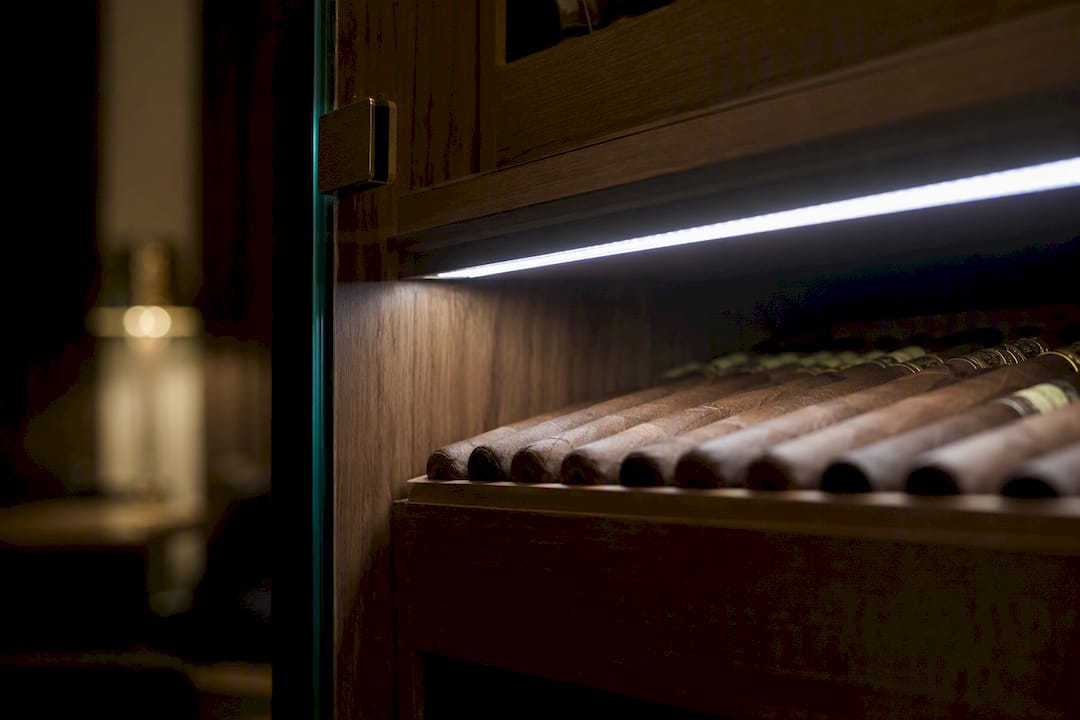
Practical fixes are simple: keep interior lighting on a timer or motion sensor rather than leaving it lit continuously, position the highest-value or oldest cigars away from the glass and toward the back or lower shelves, and if you’re speccing a new cabinet humidor, ask specifically about UV-filtered glass and LED fixtures rather than assuming standard display lighting is safe for long-term storage.
Integrating a lounge humidor into your room’s HVAC
A standalone cabinet fights its environment. A humidor built into a room where the HVAC system already holds stable temperature and humidity fights almost nothing, and that difference compounds over years of storage.
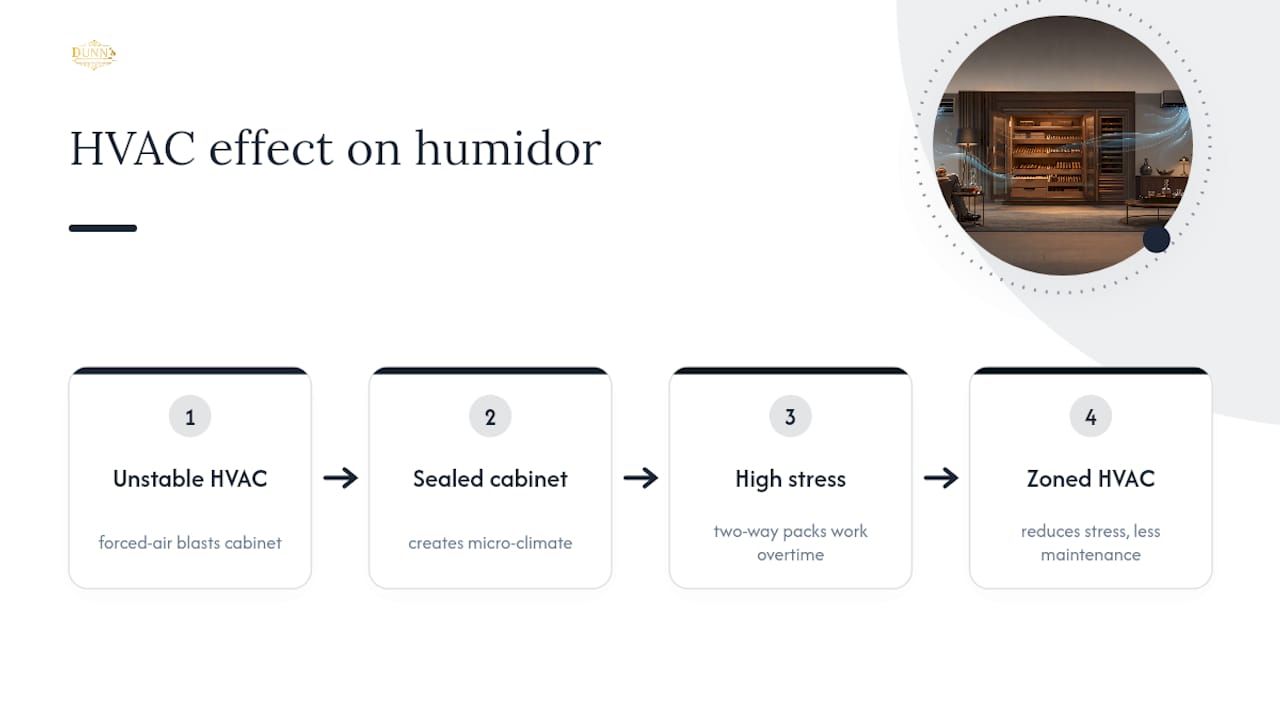
That gap is exactly why a sealed cabinet with its own micro-climate exists in the first place. But the room around that cabinet still matters. A lounge with a forced-air furnace blasting dry winter air directly at a cabinet’s exterior forces the interior humidification system to work overtime just holding steady, shortening the lifespan of every two-way pack inside.
This is where zoning a cigar room’s climate becomes worth the investment for clubs and serious home installations, since it lets individual lockers or cabinets do far less work to hold their target range. Broader HVAC and siting choices for the room itself, covered in guidance on cigar lounge air solutions, directly affect how much maintenance your humidor setup demands month to month.
Collector perspective: stability beats perfection
Stop over-adjusting daily, stop mixing humidification methods without logging results, and stop skipping calibration. Stage your fill, log your readings, and let the cabinet settle.
— Belle Dunn
Dunn’s lounge and club humidor options
Dunn’s Luxury Selections built its locker and cabinet line around the exact problem this guide walks through: keeping dozens or hundreds of cigars stable without asking a lounge manager to babysit hygrometers all day.
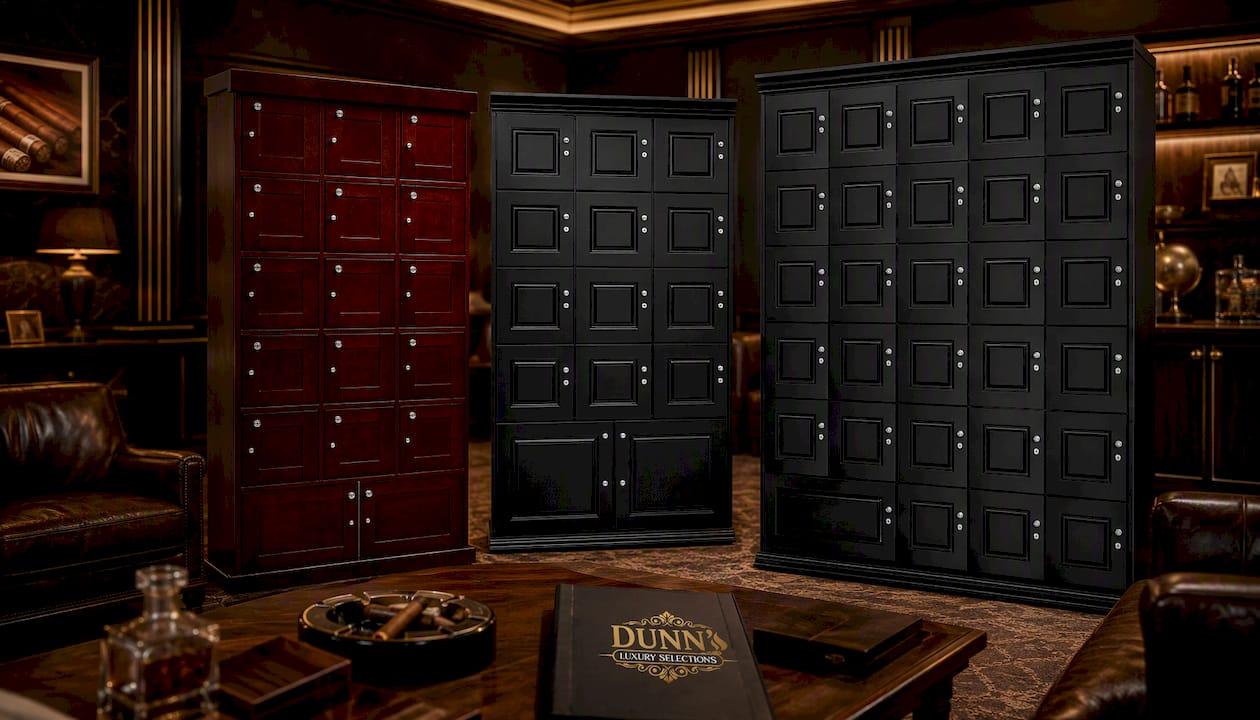
For member-based lounges, the 17-locker cabinet gives each member sealed, individual storage inside one shared climate system. Clubs managing serious volume turn to the commercial cigar locker humidor built for thousands of cigars, or the 29-unit locker system when membership numbers push past what a single commercial unit handles. Every installation ships with white-glove delivery and a consultation to spec the right capacity and control system for your space before anything arrives. If your lounge is outgrowing improvised storage, request a consultation at Dunn’s Luxury Selections and get a specification built around your actual member count.
Sources
- Cigar storage: does cellophane affect humidor season?
- Ideal cigar humidity guide | Humidorist
- What is the 135 Rule for Cigar Humidity?
FAQ
What is the 135 rule for cigars?
Add your room’s temperature in Fahrenheit to your target relative humidity; aiming for a sum near 135 helps you pick a compatible pair, like 66°F and 69% RH, instead of forcing a rigid 70/70 in a room that won’t hold it.
Is 75% humidity too high for a humidor?
Yes. Above roughly 72–75% RH, mold risk rises sharply and tobacco beetle eggs are more likely to hatch, so most collectors hold closer to 65–70% instead.
Should I unwrap my cigars before I put them in my humidor?
No. Cellophane is breathable enough to let cigars absorb humidity normally, and leaving it on during the first few weeks protects wrappers while the cabinet’s environment settles.
How long does seasoning a new humidor take?
Most cabinets reach a stable target RH within several days to two weeks, depending on size and the seasoning method used, and you should hold that reading steady for two to three days before loading cigars.
How often should I replace two-way humidity packs?
Replace them once they feel hard rather than pliable, typically every two to six months depending on your climate and how often the cabinet gets opened.
What’s the difference between plume and mold on a cigar?
Plume is a harmless, dusty crystalline bloom that signals aging oils surfacing on the wrapper, while mold is fuzzy, spreads, and requires pulling affected cigars and re-stabilizing the cabinet’s humidity immediately.
Recommended
You May Also Enjoy
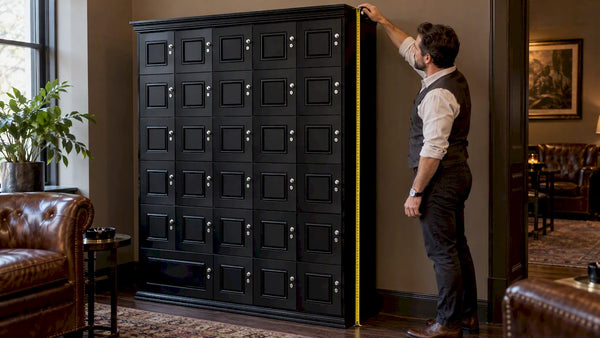
Cigar Locker Dimensions: Sizing Guide for Collectors and Lounges
Cigar locker dimensions explained: compartment sizes, cabinet footprints, capacity math and clearances, so you size a locker bank...
Read Article
Sealing a Walk-In Humidor: Envelope, Door and Penetrations
How to seal a walk-in humidor properly: vapor barrier placement, door gasket, penetrations and the controlled airflow a...
Read Article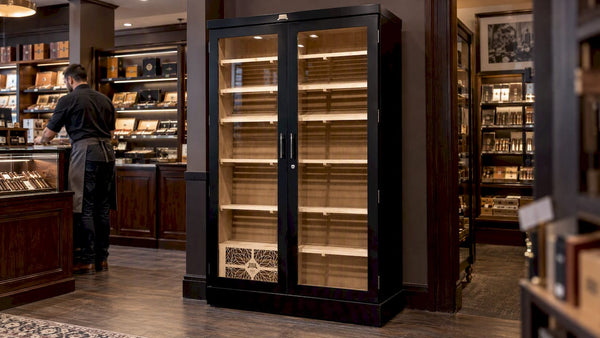
Retail Humidor ROI: How to Measure What a Display Earns
What does a retail or lounge humidor really return? A practical framework for cigar shops, lounges and clubs:...
Read Article