

Set cigar locker to 65–68% RH and 66–68°F. Locker focused tips on seasoning, zoning, controllers, and preventing mold and beetles.
Set your cigar locker to 65–68% relative humidity and 66 to 68°F for most collections. That band keeps tobacco oils active for a proper burn while staying well clear of the temperature and humidity combination that hatches tobacco beetle eggs or invites mold. Everything else, from seasoning a new locker to adjusting for wrapper type, is really just the craft of holding that target steady.
TL;DR:
- Maintaining a stable humidity around 65–68% is crucial, with any drift above 70% significantly increasing mold and beetle risks.
- Using precise, sealed humidity packs like Boveda ensures consistent RH levels without overshoot, especially in larger or high-traffic lockers.
- Regular calibration of hygrometers and manual pinch tests are essential to accurately monitor moisture levels over time.
- Long-term aging favors slightly lower humidity and cooler temperatures, but rapid changes or overshooting into the 70s risk mold and beetle hatching.
- Proper placement of the locker away from walls, sunlight, and vents supports consistent climate control and minimizes fluctuations.
Table of Contents
- What Are the Ideal Cigar Locker Humidity Settings?
- How Do You Set and Monitor a Cigar Locker Properly?
- How Should You Adjust Settings for Different Cigars and Goals?
- What Should You Do When Humidity Goes Wrong?
- Why Dunn’s Luxury Selections Approaches Humidity Control Differently
- A Collector’s Take on Choosing Your Number
- Get Expert Help Setting Up Your Cigar Locker
- Sources
- FAQ
What Are the Ideal Cigar Locker Humidity Settings?
Habanos S.A. itself recommends 65–70% RH for aged Cuban cigars, paired with cooler storage temperatures than most people assume.
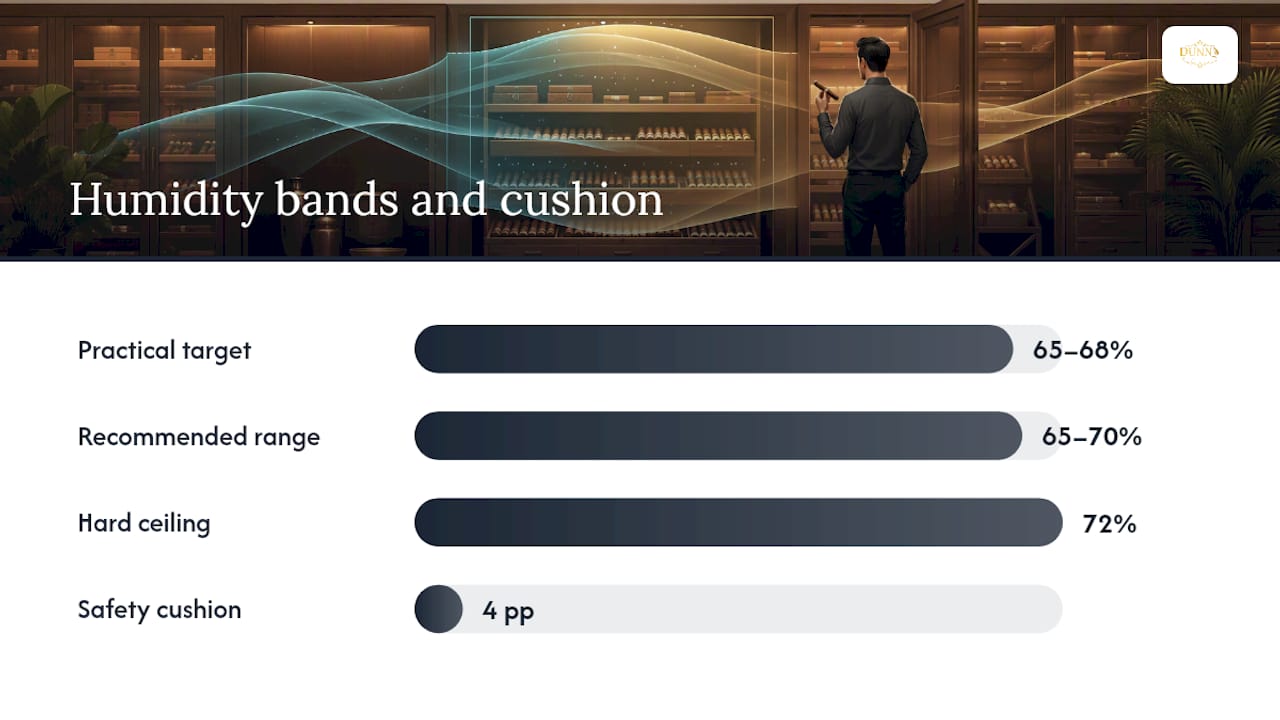
Here is why the lower end wins in practice. Humidity swings are the real enemy, not the number itself. A locker that drifts from 65% to 72% overnight is more dangerous than one that sits rock steady at 68%. Cigarro’s guide to the 70/70 rule makes the case that 65% has become a safer default precisely because it gives you room to breathe before you cross into risk territory.
That risk territory has a specific address. Tobacco beetle larvae hatch at a sharply higher rate once temperature and humidity both climb past roughly 72 (°F and ARH), which is why serious collectors treat 72 as a hard ceiling rather than a target to approach. Mold operates on a different threshold.
Long-term aging calls for a cooler, drier posture than the humidor you smoke from every week. Here is how the two goals compare:
Notice the pattern. Every recommended band sits comfortably below both danger zones, with a cushion of several points built in. That cushion is the whole point. Chasing an exact number to the decimal matters less than building a locker that cannot drift into the low 70s even on a humid August afternoon.
How Do You Set and Monitor a Cigar Locker Properly?
Getting a locker to the right number once is easy. Keeping it there for years is the actual skill, and it starts before a single cigar goes inside.
Seasoning a new wooden locker. Spanish cedar is porous, and dry cedar will pull moisture straight out of your cigars if you skip this step.
- Wipe every interior surface with distilled water on a clean cloth, never soaking, just damp.
- Place a humidification source inside and close the door for 48 to 72 hours before loading any cigars.
- Check the hygrometer reading after that window. If it holds steady near your target for 24 hours, the wood is seasoned and ready.
- Load cigars gradually over the following week rather than filling the locker at once, which lets the internal climate absorb the load without overshooting.
Choosing a humidification method. You have three practical options, and the right one depends on locker size and how much hands-on maintenance you want.
- Two-way humidity packs like Boveda regulate to a precise target and cannot overshoot, since the sealed gel only releases or absorbs moisture to hold its printed RH level.
- Propylene glycol solutions in foam or gel humidifiers work well in larger cabinets but need more frequent refilling and closer watching.
- Electronic humidifiers with built-in controllers suit walk-in and commercial lockers where manual refilling every few weeks is not realistic.
Boveda’s own sizing guidance suggests roughly one 60 gram pack per 25 cigars as a starting rule, scaled up for larger cabinets and commercial lockers.
Hygrometer placement and calibration. Put your hygrometer at cigar height, not near the door or directly beside a humidifier, since both spots read differently than the air your cigars actually sit in. Digital hygrometers drift over months, so calibrate quarterly using a simple salt test, or invest in a factory-calibrated unit if your locker holds a collection worth protecting. Monitor your humidor’s humidity readings regularly, increasing the frequency of checks during seasonal humidity extremes such as humid summers or dry winters, when greater fluctuations can challenge the locker’s seal and climate control.
Pro Tip: Trust your fingers as much as your hygrometer. The pinch test is simple: gently squeeze the cigar near the foot. A slight spring back with no crackle means the moisture is right, regardless of what the digital readout says.
Keep a simple log, even a notebook by the locker door, tracking date, reading, and any refill. Patterns show up fast once you have three or four weeks of data, and that log is what tells you whether your locker runs dry in winter or damp in summer before it becomes a problem.
How Should You Adjust Settings for Different Cigars and Goals?
Not every cigar wants the same number, and pretending otherwise is how mixed collections end up with half the box tasting flat.
Some high-end makers design multi-zone lockers to let one compartment run cooler and drier for aging stock while another stays at everyday smoking humidity.
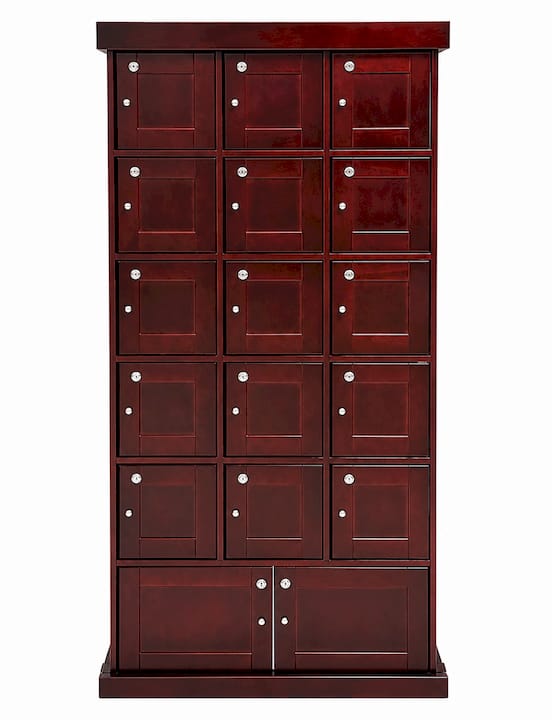
Moving cigars between zones is not instant. Skip that resting period and you will notice uneven burn and a wrapper that feels tight even when the hygrometer says it should be fine.
A few working rules worth keeping on the wall near your locker:
- Aging stock: 60–65% RH, 62–65°F, minimal handling.
- Everyday rotation: 65–70% RH, 66–70°F, checked weekly.
- New arrivals of unknown provenance: quarantine at 65% RH for two weeks before joining the main collection.
- Mixed boxes with multiple wrapper types: default to 66–67% RH unless one variety dominates the box.
What Should You Do When Humidity Goes Wrong?
Most locker disasters give warning signs days before they become unfixable, if you know what to look for.
Mold and plume get confused constantly, and mixing them up wastes precious time. Plume is a dry, powdery, grayish dusting that brushes off easily and smells faintly sweet. Mold is fuzzy, often blue, green, or white, feels damp to the touch, and carries a musty, unpleasant odor. If you see mold, the response has to be immediate.
- Remove the affected cigars from the locker entirely and isolate them in a separate room.
- Wipe unaffected neighboring cigars with a barely damp cloth and inspect closely for spread.
- Drop the main locker’s humidity to 62–65% RH for at least a week while you clean interior surfaces and confirm no lingering moisture pockets remain.
- Discard anything with active fuzzy growth. It is not salvageable, and keeping it risks the rest of the box.
Beetle risk deserves the same urgency but a different fix, since the eggs are already inside the tobacco by the time you’d notice anything. Keeping your locker below 72°F and 72% RH combined is the single most effective prevention step, since that dual threshold is what triggers larvae hatching in the first place. Freezing suspect cigars for 72 hours in a sealed bag, then thawing slowly, is the standard response if you suspect an infestation.
Dried out cigars need patience, not a humidity spike. Rehydrate gradually over one to two weeks rather than dropping them straight into a high humidity environment, which can crack wrappers that have already gone brittle.
Routine maintenance checklist: hygrometer calibration every 90 days, humidity pack replacement every 60 to 90 days depending on your locker’s air exchange, and a visual inspection of every box every two weeks during peak summer humidity swings.
Why Dunn’s Luxury Selections Approaches Humidity Control Differently
I have spent years around collectors who treat their lockers as an afterthought right up until the day mold shows up on a box of cigars they have aged for a decade. That is the moment premium construction stops being a luxury and starts being insurance.
A well built locker does most of the humidity work before you ever touch a humidifier. Genuine Spanish cedar interiors regulate moisture naturally and repel the tobacco beetle through the oils in the wood itself. Precision controllers holding ±1–2% RH turn what used to be a weekly chore into an occasional glance at a digital readout.
Placement matters more than most new owners expect. It is recommended to keep any locker away from exterior walls, direct sunlight, and HVAC vents, since all three introduce the exact temperature swings that precision engineering exists to prevent. Placement consultation is important, because a perfectly built locker in the wrong spot in a room still fights an uphill battle.
- Smaller personal collections and clubs benefit from compact, multi-compartment cabinets that separate aging stock from everyday rotation.
- Lounges and retail environments need commercial capacity with the same precision controllers scaled up.
- Large clubs and serious collectors managing thousands of cigars need multi-unit systems built for consistent airflow across every drawer.
Pro Tip: If you are outfitting a locker for a mixed collection, ask about compartmentalized zones during consultation. Running two humidity targets in one cabinet is far easier with proper zone dividers than with a single open interior.
A Collector’s Take on Choosing Your Number
Here is the tension nobody tells you about when you start collecting: richer flavor lives at the higher end of the humidity range, but so does risk.
My advice is unglamorous. Pick a number inside the safe band, commit to it for a full season, and log what happens rather than adjusting every time a magazine article suggests a different figure. Use compartments to run small experiments on a few sticks at a time instead of gambling with the whole collection, and let the pinch test and your own palate settle disagreements the hygrometer cannot.
— Belle Dunn
Get Expert Help Setting Up Your Cigar Locker
Owning the right number is only half the equation. Holding it for years, through humid summers and dry winters, is where most collectors quietly struggle, and precision controlled lockers help avoid guesswork and constant adjustment.
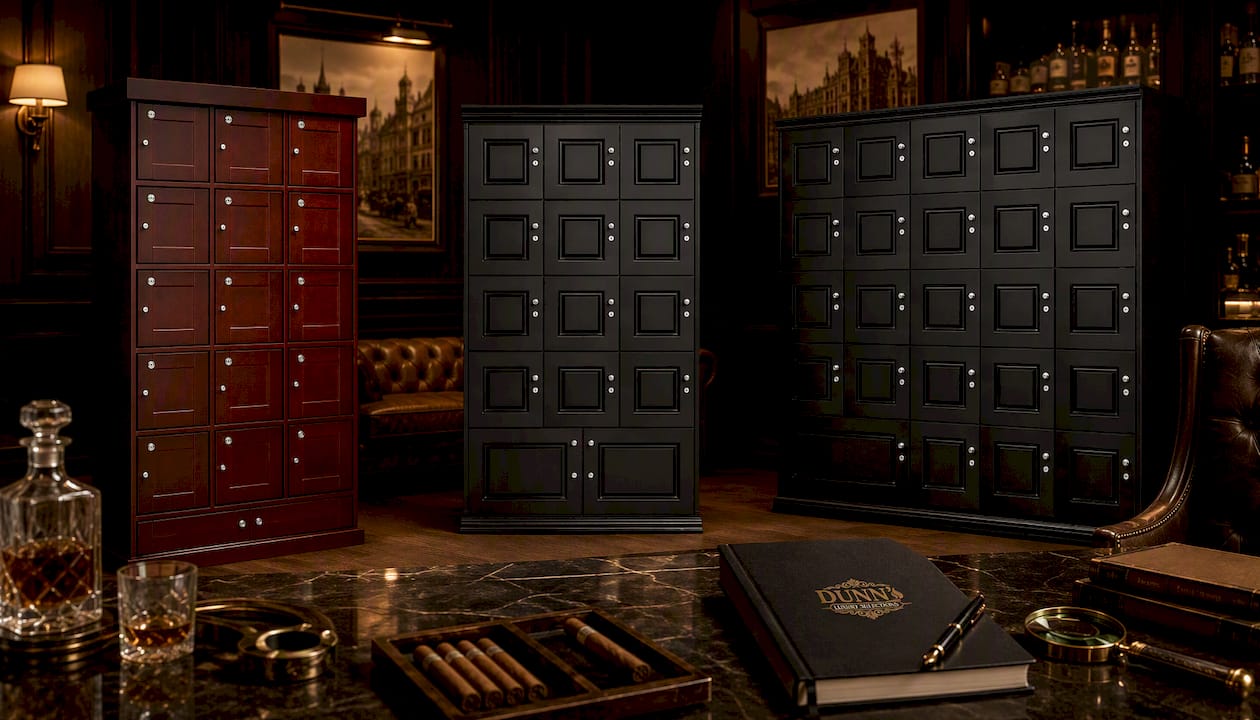
For collectors building a personal or club sized collection, the 17-Lockers Cigar Humidor Cabinet in Dark Cherry offers individually assignable compartments, ideal for managing different wrapper types or member storage without one cigar’s humidity needs compromising another’s. Lounges and retail operations scaling up should look at the Humidor Supreme Commercial Cigar Locker, built for 5,000 cigar capacity with the insulation and controller precision that large volume storage demands. For clubs managing member lockers at scale, the 29-unit commercial locker delivers consistent zone by zone humidity across every compartment. If you are still comparing formats for your space, our cigar club humidor types guide walks through capacity and use case differences in more depth, and our controller settings guide covers exact starting points for new units.
Request a consultation through Dunnluxuryselections to walk through which model fits your collection size, room, and humidity goals before you buy.
Sources
- What Is the Perfect Temperature and Humidity for Cigars? | Teach Me Cigars
- Cigar Humidity Guide: The 70/70 Rule Explained | Cigarro
- Best Humidity Range for Aging Cigars Long-Term | 2026 Guide — Luxury Wine Appliances
- Cigar Mold: What It Is and How to Get Rid of It — TNext Cigar
FAQ
Is 80% Humidity Too High for Cigars?
Yes. Eighty percent RH sits well above every recommended band and firmly inside mold risk territory, especially if paired with warm temperatures above 72°F.
How Often Should You Check Your Cigar Locker’s Humidity?
Check weekly during stable seasons and every few days during summer heat or winter dryness, when outdoor conditions put the most stress on your locker’s seal.
Recommended
You May Also Enjoy
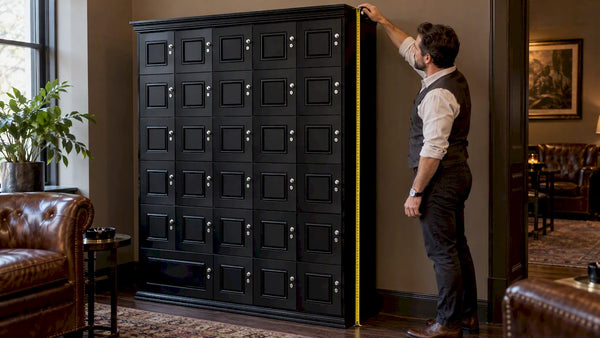
Cigar Locker Dimensions: Sizing Guide for Collectors and Lounges
Cigar locker dimensions explained: compartment sizes, cabinet footprints, capacity math and clearances, so you size a locker bank...
Read Article
Sealing a Walk-In Humidor: Envelope, Door and Penetrations
How to seal a walk-in humidor properly: vapor barrier placement, door gasket, penetrations and the controlled airflow a...
Read Article
Retail Humidor ROI: How to Measure What a Display Earns
What does a retail or lounge humidor really return? A practical framework for cigar shops, lounges and clubs:...
Read Article